I had seen the Dr. Bhau Daji Lad Museum countless times from outside while visiting Rani Baug with my parents. Surprisingly, the building never really gave away what was waiting inside. Despite living in Mumbai and passing it so many times, I had never stepped through its doors.
That changed when Sarah and I finally decided to visit. We went in without much of an idea about what we were going to see. A few photographs had given us a glimpse, but that was about it.
What happened after we walked inside surprised us. The building itself caught our attention before we had even properly started looking at the exhibits, and once we began exploring the galleries, we realised there was far more to this museum than we had expected.
We spent nearly three hours inside, moving between the galleries, looking at old photographs, maps, models, objects and the details of the building itself.
And somewhere along the way, I realised that the Dr. Bhau Daji Lad Museum wasn’t just showing us Mumbai’s history — it was making us look at the city a little differently.
Bhau Daji Lad Museum: Mumbai’s Story Told Through Objects
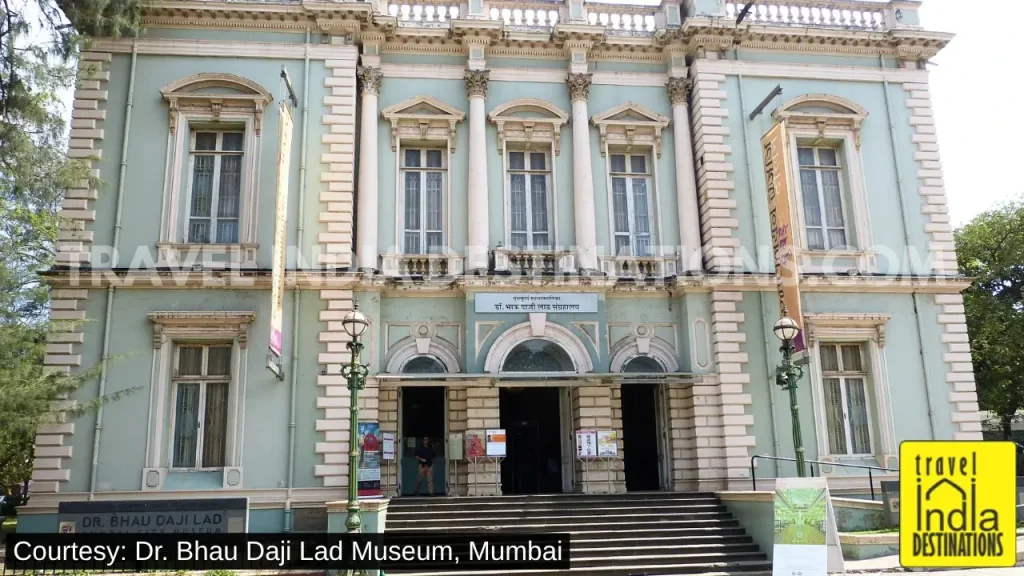
You may walk into the Dr. Bhau Daji Lad Museum expecting to see an old building filled with paintings and historical objects. What you may not expect is how much of Mumbai’s own story is sitting inside it.
The museum’s permanent collection brings together miniature clay models, dioramas, maps, lithographs, photographs, rare books, paintings and examples of fine and decorative arts.
Many of these tell us about Mumbai and its people from the late 18th to the early 20th century, while newer acquisitions continue to expand the collection into the city’s later art and cultural history.
What we found particularly interesting was how the exhibits allow you to see Mumbai changing over time.
Maps and models show the city when it was still made up of seven islands and how its landscape evolved as Bombay grew.
Photographs document its buildings, streets, harbour and changing neighbourhoods, while clay models and dioramas offer glimpses of the occupations, communities and everyday lives of the people who shaped the city.
The museum also has a remarkable photographic archive, including more than 1,500 glass negatives documenting 19th-century Mumbai. Looking at some of these images, you get a sense of just how different the city once looked.
And perhaps that’s the easiest way to understand what makes this museum interesting: don’t look at the exhibits as isolated old objects. Look at them as pieces of Mumbai’s story.
You don’t need to know much about art to enjoy that experience. Walk in with a little curiosity and let the objects slowly introduce you to an older Mumbai.
What Stood Out When We Visited Bhau Daji Lad Museum
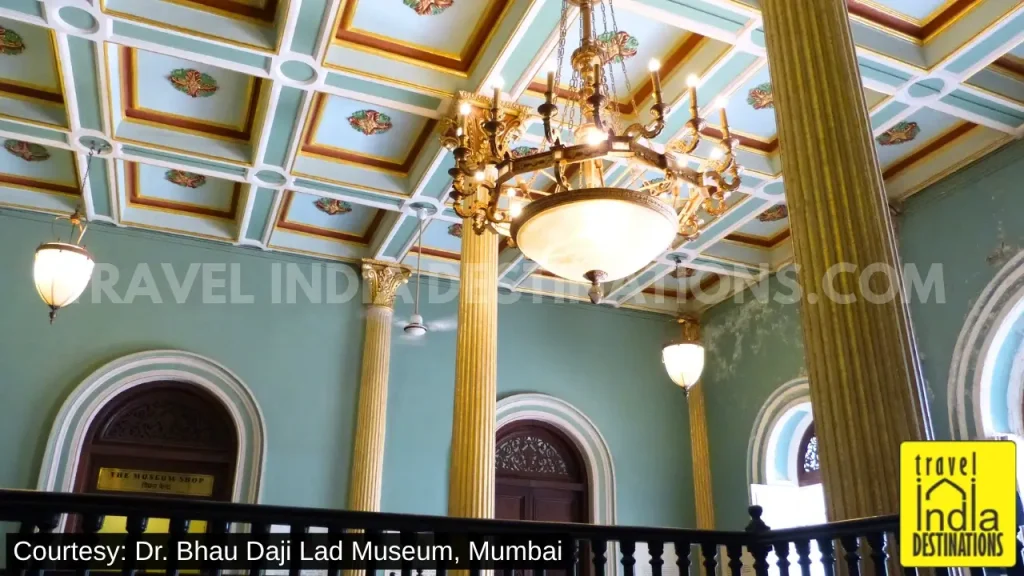
Visiting the Dr. Bhau Daji Lad Museum was quite an experience. From the outside, it looks like a fairly typical pre-Independence-era structure. The renovation had made the building look clean and bright. However, what caught our attention even before we reached the main hall was the interior.
The Grand Renaissance Revival style architecture immediately captures the attention.
The decorated ceiling, tall goldenish pillars and chandelier gave us an early glimpse of the grandeur waiting beyond the entrance. The dark chocolate-coloured wooden doors and furniture stood out against the celadon-green walls, and we hadn’t even reached the galleries yet.
Once we passed security and entered the main hall, we stopped for a moment just to take it all in.
The ground floor opened up in front of us, with glass exhibit cabinets arranged along the sides and the central space left largely clear. This gave us an uninterrupted view of the statues of Prince Albert and David Sassoon.
Above us, the large arched roof added to the sense of scale, while the morning light coming through the windows reflected softly off the glass cabinets.
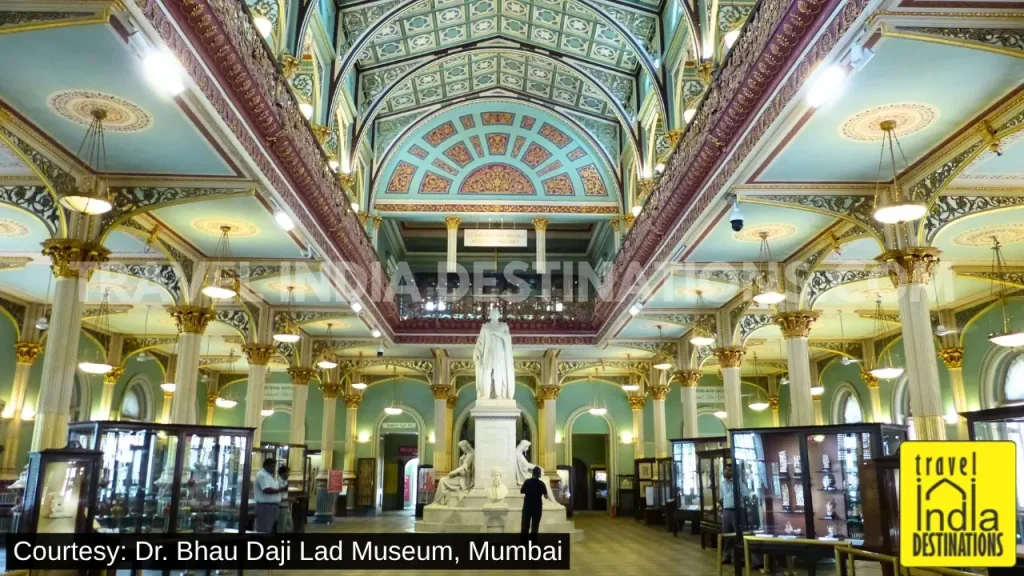
We had deliberately arrived early. There were only three or four other visitors in the museum when we entered, which worked perfectly for us because we wanted to photograph the interiors without constantly getting other visitors in our frames.
And we have to admit, we had no real idea what we were going to see. We had looked at a few photographs before visiting, but that was about it. So we walked in with practically zero expectations.
Our first reaction was simply: glad we came here.
At first glance, the museum can almost seem sparse. But once we started looking closely at the exhibits, that impression quickly disappeared. There was far more to see and learn than we had expected.
Interestingly, I found myself photographing the building as much as — and probably more than — the exhibits. Look beyond the display cabinets and there is something to notice almost everywhere: door arches, chandeliers, pillars, cast-iron railings, floor tiles and the enormous arched roof.
To be honest, the building itself feels like part of the museum’s collection.
The exhibits, thankfully, are not difficult to approach even if you aren’t an art enthusiast. Most are fairly self-explanatory, with title cards and descriptions providing additional context when you want to know more.
We eventually made our way from the ground floor upstairs and spent nearly two hours and forty minutes inside. By the time we walked out a little after 1 pm, my feeling was simple: I bet every visitor walks out of this museum more informed than when they walked in.
And that, for me, is what makes Bhau Daji Lad Museum worth experiencing.
The Story Behind Bhau Daji Lad Museum
The story of the Dr. Bhau Daji Lad Museum begins in the middle of the 19th century, when Bombay was rapidly growing into an important centre of trade, industry and commerce.
There was a growing interest in documenting the city’s culture, crafts and way of life, and the idea of creating a museum for Bombay emerged around this time.
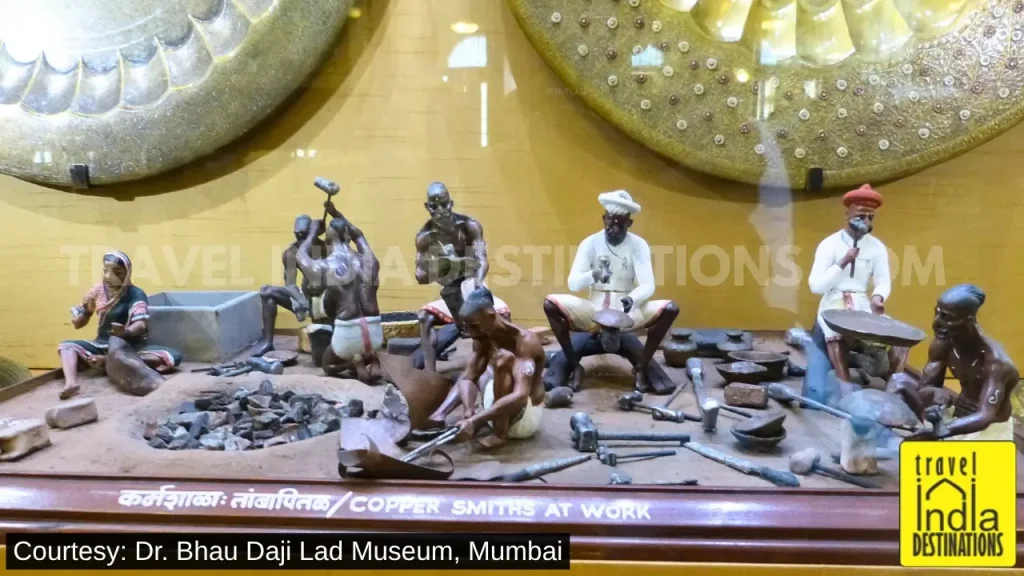
The museum’s early story is closely connected with the Great Exhibition at London’s Crystal Palace in 1851. Objects and replicas representing the arts and crafts of the Bombay Presidency were sent to the exhibition, helping build momentum for a permanent collection in Bombay.
A museum was established in 1855, initially known as the Central Museum of Natural History, Economy, Geology, Industry and Arts. Plans for a dedicated building followed, with Dr. Bhau Daji Lad and Dr. George Birdwood playing important roles in raising funds and developing the collection.
The museum was established in 1857, making it the oldest museum in Bombay, and the third oldest museum in India.
The museum was renamed the Dr. Bhau Daji Lad Museum in 1975, in honour of the physician, scholar and philanthropist who had been instrumental in its early development.
But the story didn’t end there. By the late 20th century, both the historic building and many of its objects were in need of serious attention. What followed was a major restoration that would give the museum a new lease of life.
The Restoration That Brought Bhau Daji Lad Museum Back to Life
The museum we see today wasn’t always in such good shape. By the late 20th century, the historic building had suffered from years of neglect. Parts of the façade and interior needed serious attention, while damaged glass, ironwork and fading decorative details were taking a toll on the building.
The turning point came in 1997, when the Indian National Trust for Art and Cultural Heritage (INTACH) visited the museum while looking for a place to establish a conservation laboratory.
Seeing the condition of the building, INTACH decided to take up its restoration and subsequently worked with the Municipal Corporation of Greater Mumbai (MCGM).
The project gained further momentum when the Jamnalal Bajaj Foundation came on board. In 2003, MCGM, INTACH, the Foundation and the Dr. Bhau Daji Lad Museum Trust came together in a public-private partnership to undertake the restoration.
The work went beyond the building itself. Many objects in the collection had also suffered from neglect and poor handling, so conservators worked on thousands of artefacts and specialists restored different elements of the collection.
The way the objects were displayed was also rethought. Instead of simply placing them in galleries, the Museum Trust created a clearer storyline around two broad themes: the evolution of Bombay from its seven original islands into a cosmopolitan city, and the development of trade, industrial arts and the everyday lives of its people.
After five years of restoration, the museum reopened to the public in 2008. The restoration project had already received the 2005 UNESCO Asia-Pacific Heritage Award of Excellence for Conservation, recognising the importance of preserving this remarkable historic building and its collection.
And when you eventually stand inside the museum and look around at the restored interiors, it is surprisingly easy to forget that this building once needed such extensive intervention.
Exploring the Galleries Inside Bhau Daji Lad Museum
We would suggest taking your time on the ground floor before heading upstairs because there is quite a variety here. You move from weapons and woodwork to paintings, old maps and photographs, and then into objects that show how Indian craftsmanship evolved during the 19th century.
The Armoury Gallery is an easy place to get drawn into, with swords, daggers and small cannons on display. Even if you’re not particularly interested in weapons, some of these pieces are difficult to walk past without taking a closer look.
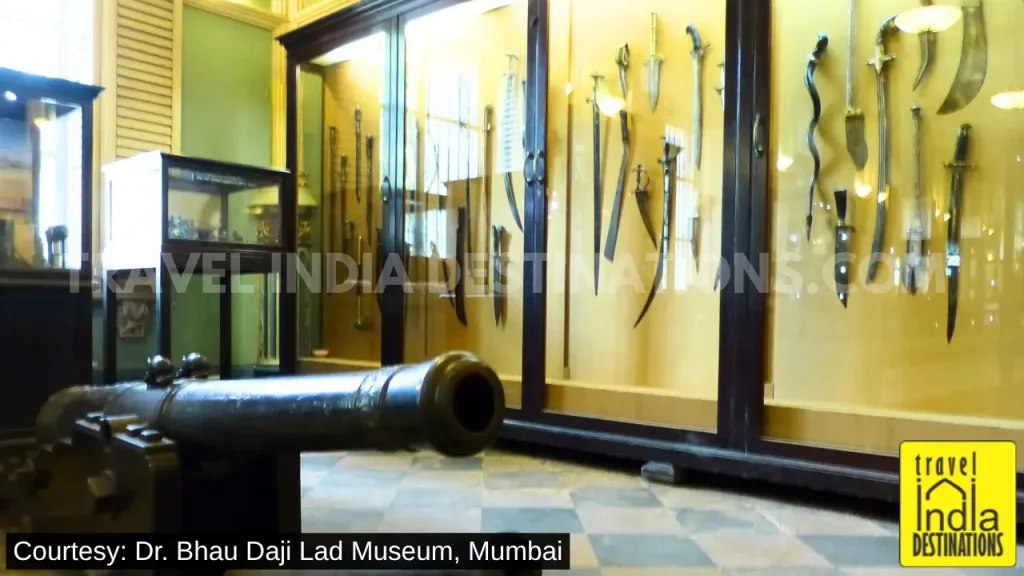
The Wood Carving Gallery offers something completely different. There are objects made from sandalwood along with larger wooden figures and statues, and here the craftsmanship is as interesting as the objects themselves.
The Industrial Arts Gallery shows how Indian craftsmanship was influenced by international trade during the 19th century. Indian decorative objects were highly valued in European markets, and local traditions were often adapted to European tastes. The result is an interesting mix of Indian craftsmanship and outside influences.
There are also displays of ivory, mother-of-pearl, large vases, plates and other decorative objects. These may not demand as much attention as some of the larger galleries, but they are worth a closer look if you enjoy materials, patterns and craftsmanship.
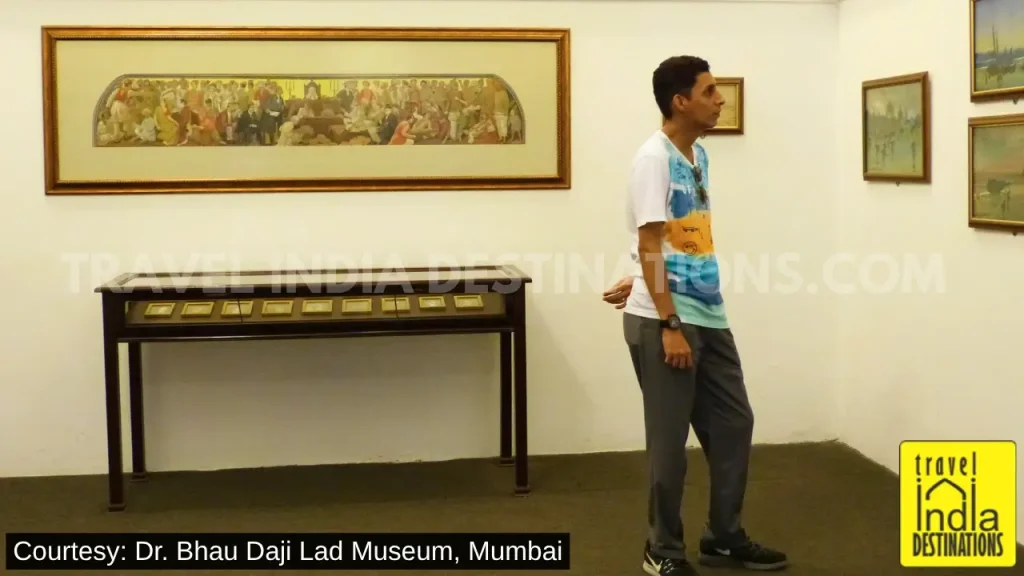
The 19th Century Painting Gallery takes you into another side of the museum’s collection. The museum had a close association with Sir J.J. School of Art, and some of its early objects were produced in the school’s workshops. The collection is relatively small, but the paintings, pottery and other objects give you a glimpse into Bombay’s artistic environment during the period.
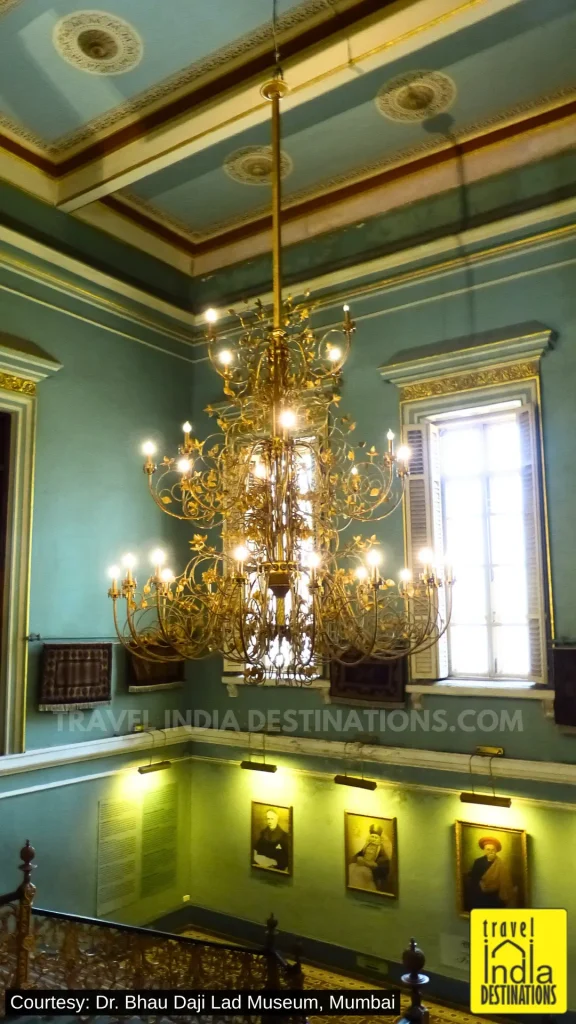
And don’t assume the grand staircase is merely a way of getting upstairs.
The Founders’ Gallery, located between the two floors, pays tribute to the people who played important roles in establishing the museum. Portraits of Dr. Bhau Daji Lad, George Birdwood, Jagannath Shankar Sheth, Jamsetjee Jeejeebhoy and George Buist tell another part of the museum’s story. It is a small section, but an interesting pause before you continue upstairs.
Once you reach the first floor, the focus changes.
Origins of Mumbai: This is where the museum’s story of Mumbai really comes alive for me. Maps, lithographs, watercolours and photographs take you back to a time when Mumbai was still a group of seven islands and show how the city gradually developed into the 19th-century Bombay captured in old photographs and illustrations.
If you’re particularly curious in Mumbai’s history, don’t rush through this gallery.
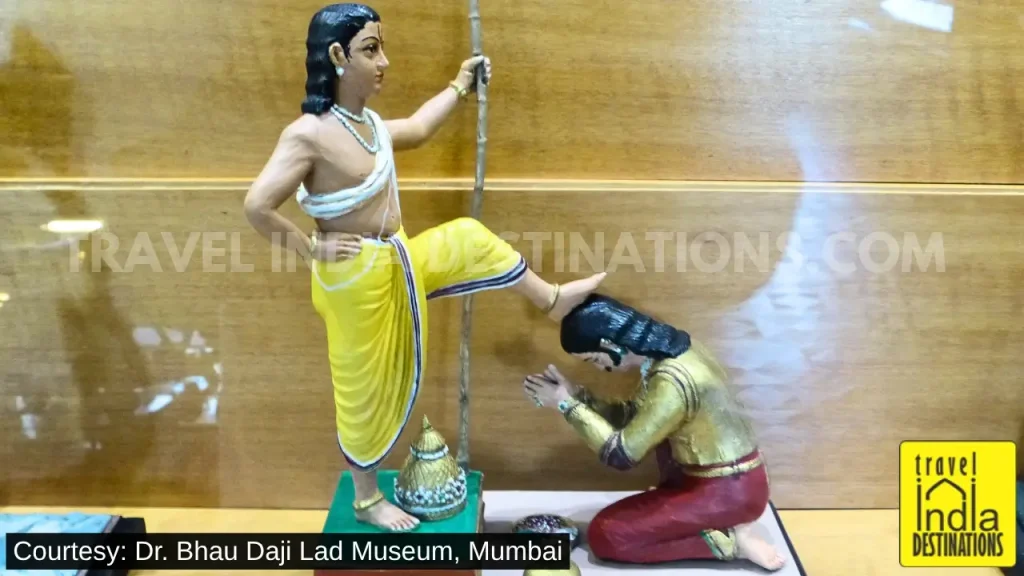
Kamalnayan Bajaj Mumbai Gallery: The story then moves beyond the city’s physical development to the people who made Mumbai what it became. Through dioramas and models, the Kamalnayan Bajaj Mumbai Gallery explores the communities that migrated to the city, their occupations, lifestyles, games, leisure activities, music, dance and religious traditions.
It also gives you glimpses of village life, agriculture, 19th-century town planning and the many Indian regiments of the period. The dioramas make this section particularly approachable because instead of simply reading about life in old Mumbai, you get to see it recreated in front of you.
Step Outside: Museum Plaza and the East Garden
Once you’ve explored the galleries inside, don’t head straight for the exit. An exit beside the grand staircase takes you towards the rear of the building and into the Museum Plaza, an open space created in 2012 that combines greenery, art and restored historic structures.
The Plaza is home to the Special Project Space, housed in a restored old cottage that was once used as a workshop for making museum objects. The space now hosts exhibitions and cultural programmes, while retaining much of the character of the original building.
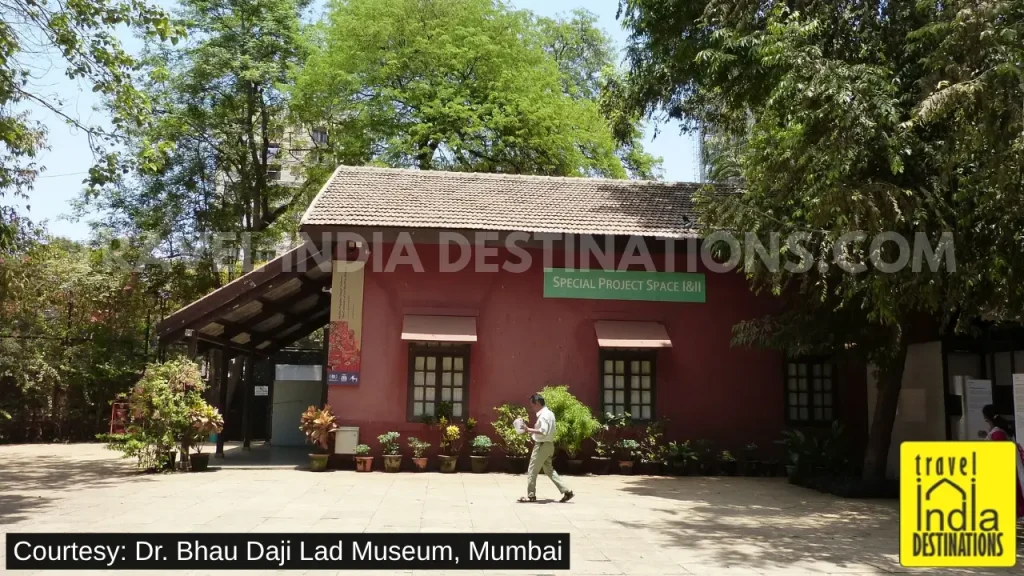
This is also where you will find the Education Centre, a Museum Café and Museum Shop. On the east side of the building is the East Garden, a quieter outdoor space where greenery and art come together. There are sculptures and other historic pieces here, including the 6th-century Elephanta elephant.
After spending hours inside looking at objects, photographs, maps and models, this outdoor space gives you somewhere to slow down before leaving.
For us, it was a nice way to end the museum experience — the art and history don’t stop at the doors of the main building.
How Much Time Do You Need at Bhau Daji Lad Museum?
Give yourself at least two hours if you want to properly explore the Dr. Bhau Daji Lad Museum. There is enough here to keep you occupied beyond simply walking from one gallery to another, especially if you enjoy old photographs, maps, models, decorative arts or architecture.
We explored both floors, stopped to look at the exhibits, photographed the interiors and also spent some time outside around Museum Plaza and the gardens.
If you are particularly interested in museums, history or photography, we would comfortably keep 2–3 hours aside. If you simply want a quick look at the main galleries, you can obviously do it faster.
My advice? Don’t rush this one.
The museum may not look enormous when you first walk in, but once you start paying attention to the objects and the details around you, there is considerably more to see than you might expect.
Plan Your Visit
The Dr. Bhau Daji Lad Museum is inside the Veermata Jijabai Bhosale Botanical Udyan and Zoo (Rani Baug) compound in Byculla East. If you’re travelling by train, Byculla East station on the Central Line is the nearest railway station, just a couple of minutes’ walk from the museum.
Museum Timings:
| Museum Timings | 10:00 AM to 6:00 PM (Last Entry at 5:30 PM) |
| Museum Stays Closed on | Wednesdays & Select Public Holidays |
Museum Tickets:
| Adult (Indian National) | ₹20 |
| Children (Indian National) (Age 3 to 12 Years) | ₹10 |
| School / University/ College Kids (with valid ID) | ₹10 |
| Senior Citizen (Above 60 Years) | ₹10 |
| Adult (International Citizen) | ₹200 |
| Children (International Citizen) (Age 3 to 12 Years) | ₹100 |
* Entry is free for BMC school students and visitors with physical disabilities.
Please note that ticket prices are subject to changes, hence, always refer to their official visitor information page. You can use the same link to find updated information on audio guide, how to visit, photography guidelines, visitor rules and other policies.
Visitors can also purchase their entry tickets from museum’s official booking portal.
If you’re driving, pay-and-park facilities are available within the compound for two-wheelers, cars and buses. Parking may not be available between 5:00 and 6:30 pm because of traffic regulations near the zoo entrance.
The museum’s ground floor is wheelchair accessible via a ramp at the entrance. The Museum Plaza, including the café, shop and washrooms, can be accessed externally. At present, the first floor is not wheelchair accessible, so visitors who need assistance should contact the museum before visiting.
Frequently Asked Questions
Yes, especially if you’re interested in Mumbai’s history, architecture or simply enjoy discovering lesser-known sides of the city. You don’t need to be an art expert to enjoy it. The collection brings together objects, photographs, maps, models and decorative arts that tell the story of Mumbai and its people. The building itself is also a major part of the experience.
I’d keep 2–3 hours aside for a proper visit. We spent around 2 hours and 40 minutes exploring both floors, looking at the exhibits and taking our time with the architecture and outdoor areas. You can certainly visit faster, but there’s enough to see that rushing through it would be a shame.
The museum’s collection covers Mumbai’s history and cultural heritage through maps, photographs, models, dioramas, paintings, decorative arts and everyday objects. You can also see galleries dedicated to subjects such as the origins of Mumbai, industrial arts, wood carving and 19th-century paintings. And don’t overlook the museum’s ornate architecture while you’re exploring.
The museum is located inside the Veermata Jijabai Bhosale Botanical Udyan and Zoo (Rani Baug) compound in Byculla East, Mumbai. It is about a two-minute walk from Byculla East railway station on the Central Line.
Yes, but current photography rules apply. Visitors can take personal, non-commercial photographs using mobile phones in the permanent galleries and Museum Plaza, without flash, tripods or monopods. Video and film cameras are not permitted. Since photography rules can change, check the museum’s current guidelines before your visit, particularly if photography is important to you.
Love exploring Mumbai at a slower pace? Subscribe for more slow-travel guides and quiet corners of the city.
Is Dr. Bhau Daji Lad Museum Worth Visiting?
Absolutely, especially if you want to see a different side of Mumbai.
What surprised me most about the Dr. Bhau Daji Lad Museum was that we went in without really knowing what to expect. The experience was quite different and surprisingly better than what we had expected.
The best part about visiting Dr. Bhau Daji Lad Museum is that you don’t have to be an art enthusiast to enjoy this museum. The collection tells stories about Mumbai, its people, communities, occupations and changing landscape through objects, photographs, maps, models and decorative arts.
And then there is the building itself, which is almost an exhibit in its own right.
We would particularly recommend it if you enjoy Mumbai’s history, architecture, photography or simply discovering places that you may have overlooked for years. Families, couples and friends looking for something different to do in the city can enjoy it too.
Our visit lasted nearly three hours, and we walked out feeling that we knew a little more about Mumbai than when we walked in. For me, that’s probably the best reason to visit a museum — you leave with something you didn’t have when you arrived.
So if you’ve been passing the museum for years without going inside, take that as your sign. Go in and you will surely find something to surprise you.

10 comments
This is a great post, Sharukh. I love the museum. Most museums I am familiar with are somewhat blah, depending on the exhibit to add life and color. This museum is bright and colorful and interesting on its own merit. I enjoyed this quick tour and I look forward to the future visits.
I’m glad you loved it. I didn’t say it in the post but I am saying it here that to some extent you influenced me to do this post. The next post is gonna be better than this for sure. At least for history people like you and me.
Sharukh, the long hall of the museum is gorgeous! I think I would be standing in stunned silence if present. Thanks for taking me on a tour of the museum and providing some pertinent history. I enjoyed it!
I’m glad that you enjoyed the tour, Mary. When we stepped in believe me I and Sarah were just stunned by the beauty and architecture all around. Since we were early visitors there were just a few people around and it was so quiet and relaxing. We had all the time in the world to take pictures, read information, explore the artefacts and even talk to the employees. We were at the museum until noon as we also explored other areas of the museum which will come up in the next part. Be prepared for the second tour of this museum. It just gets better and better.
Such a fabulous post. I loved the shots and all the information you shared. Add to it, the information about Mumbai that you shared in the beginning of the post was really good. Such a colorful musuem and you took us all on a virtual tour.
I’m glad that you enjoyed the virtual tour of the museum. However, let me tell you that the tour is far from over. So far I have covered only the ground floor. Coming up next is the tour of the first floor and then the open spaces of the museum. Stay tuned, Parul.
I did like this post 🙂
Beautiful, regal structure with happy color and fabulous lamp posts! Thanks for the tour — some wonderful things in there — I really loved the shell, the fish, and the dioramas.
I’m glad you loved it. There’s more to come soon.
Such a bright and colorful museum! Loved this post, Sharukh!
Thanks, Damyanti. I hope you also like the Part 2 and 3 of the series which is a follow through of the museum tour.