There’s a certain kind of magic when you step through the ornate gates of the Chhatrapati Shivaji Maharaj Vastu Sangrahalaya (CSMVS). The city’s chaos gives way the moment we enter.
Outside, South Mumbai thrums with relentless energy: traffic honks, street vendors selling everything from keychains to cheap sunglasses.
Inside the gates, however, the spacious garden unfolds before us, framed by palm trees, with a glimpse of the magnificent white dome rising above. The booking office sits quietly to the left side, welcoming visitors without breaking the calm.

Spending a casual afternoon wandering through its high-ceiling galleries, not as historians, but as visitors looking for a bit of stillness, was an experience in itself. From delicate miniature paintings to grand sculptures, every gallery held a quiet surprise.
Whether you’re an architecture nerd, a history buff, or just someone looking to escape the sun, this museum is arguably the finest place in the city to slow down.
At a Glance
| 📍 Location | Kala Ghoda, South Mumbai |
| ⏰ Best Time to Visit | Weekday afternoons (after 2 PM) |
| ⌛ Time Needed | 2–3 hours |
| 🎧 Audio Guide | Available in seven different languages |
| 📸 Photography | Allowed with camera pass |
A Masterpiece in Stone: The Grandeur of the Dome
As you walk toward the main entrance, it’s impossible not to stop and stare. The building itself feels like the museum’s first and most impressive artifact, a breathtaking example of Indo-Saracenic architecture designed by George Wittet, the same mind behind the Gateway of India.

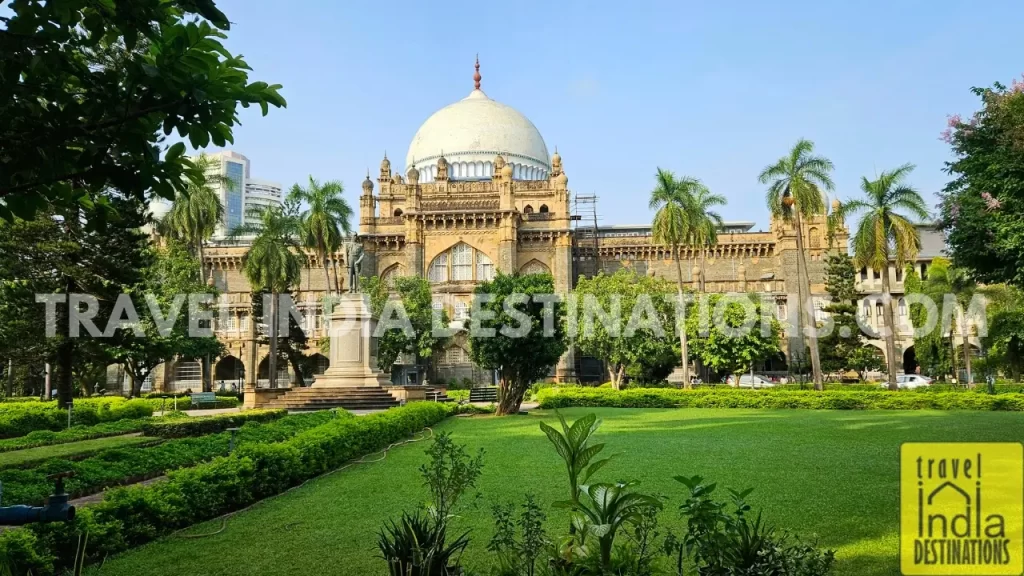
It’s no surprise that the museum sits at the heart of Mumbai’s UNESCO-listed Victorian Gothic and Art Deco ensemble; it feels less like a building and more like a living piece of the city’s soul.
What makes the façade so striking is the warm, golden-grey glow of the local Kurla and Malad yellow basalt stone.
Wittet created a beautiful, eclectic mash-up here: a massive white dome, inspired by the 17th-century Gol Gumbaz of Bijapur, rising above intricate stone latticework reminiscent of Gujarati palaces.
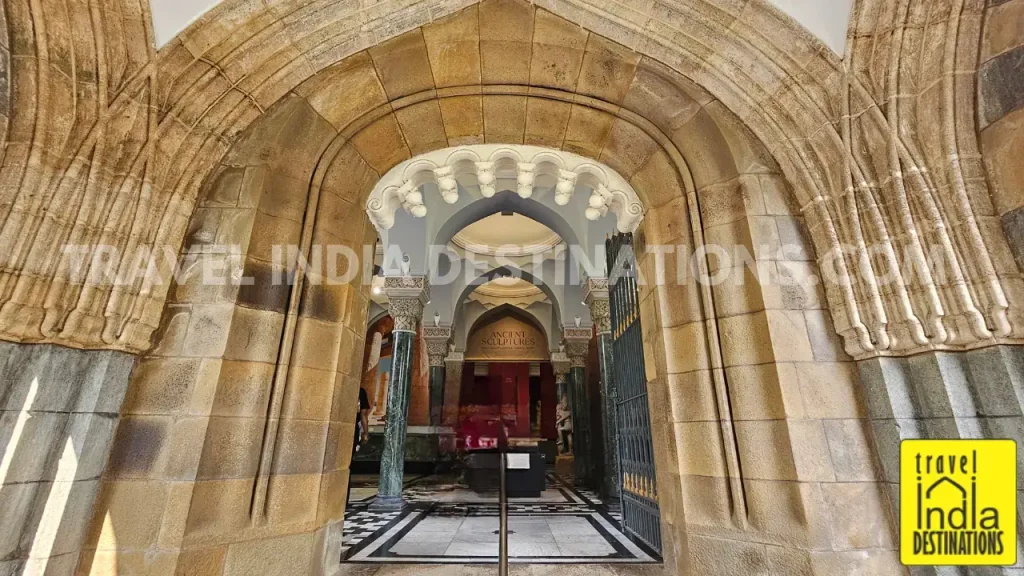

Once we stepped inside, the quiet of the afternoon truly settled in. The central atrium is a marvel of dark woodwork and soaring arches.
Standing beneath the hollow of that great dome, you realise the design wasn’t just ornamental, it naturally keeps the air cool, interiors bright and the acoustics soft.
It’s the kind of space that makes you instinctively lower your voice and look up, reminding you that before you’ve seen a single exhibit, you’re already standing inside a masterpiece.
The Rotunda Gallery: The Ever-Changing Heart
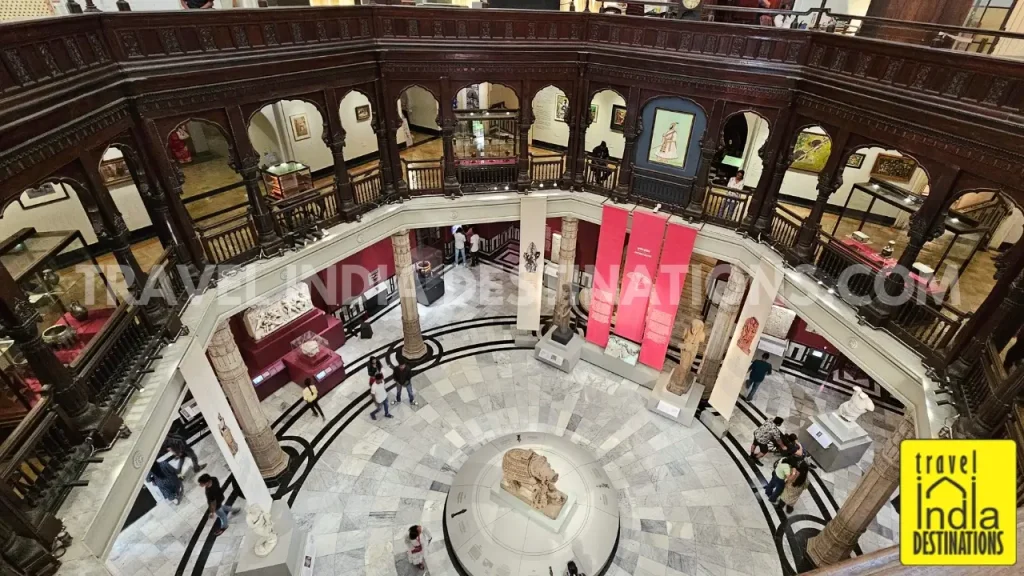
As soon as you step inside, you find yourself in the Rotunda Gallery. If you aren’t sure where to begin, this is the natural starting point. Sitting directly beneath the grand dome, the light and scale here are remarkable, perfect for wide-angled shots of the wooden balconies.

The beauty of the Rotunda is that the exhibits here keep changing. It often hosts special themed displays or new acquisitions, so even repeat visits tend to begin with something new. It works as a gentle introduction before you move on to the museum’s permanent collections of stone and steel.
The Highlights: Art, Animals, and Ancient Armour
Since we weren’t there to check off a textbook list, we let our eyes wander toward what felt most striking. If you’re following our “quiet afternoon” route, these are the three areas you shouldn’t miss:
1. The Sculpture Gallery: Guardians in Stone

Located on the ground floor, just to the right of the Rotunda, this gallery feels like a cool, stone forest.
The highlights here are the 6th-century carvings from the Elephanta and Jogeshwari caves. There’s a palpable weight to the air; seeing these intricately carved deities up close reminds you just how much history Mumbai is built upon.
The way light falls across the weathered basalt makes this gallery a quiet dream for photography, just remember to keep the flash off.
2. Natural History: A Nostalgic Time Capsule

While you’re on the ground floor, make time for the Natural History section. It’s easily the most unexpected part of the museum.
Large dioramas and an extensive collection of birds and animals give this wing a charming, old-world feel, the glass cases and preserved specimens feel like a quiet tribute to explorers of the past.
Whether you’re drawn to the plumage of exotic birds or the sheer scale of the jungle cats, it’s a refreshing pause from the stone and steel of the other galleries.
3. Arms and Armour: The Steel of Kings

Nestled on the second floor, the Arms and Armour Gallery is not to be missed. This is where the royal side of the museum’s history truly comes into focus.
The collection includes ornate Mughal and Maratha weaponry, from jewel-encrusted hilts to finely worked Damascus steel blades. Studying the craftsmanship of a 17th-century helmet makes it clear that for these warriors, armour was as much about status and artistry as it was about protection.

While the museum houses over 50,000 artefacts across dozens of specialised galleries and some placed in wide corridors, we found that focusing on just three wings made for the most relaxed and rewarding experience. Those into paintings can straightaway head to the first floor to enjoy a range of painting galleries.
Beyond the Exhibits: Finding Peace in the Museum Gardens
After exploring the galleries, don’t rush straight back onto the street. The museum sits on a sprawling green campus, a rare luxury in South Mumbai. Take fifteen minutes to sit on one of the benches in the Museum Gardens.

Moving through the garden at a slow pace is a sensory shift. From here, you get one of the best wide-angle views of the palm trees framed against the white dome, and it’s among the few places in Fort where you can actually hear birds over the traffic.
In one quiet corner, you’ll find an old baobab tree and, if you look closely, plenty of bats that now call this green space home.
Pro-Tips for the Ultimate CSMVS Experience
To make the most of a quiet afternoon at CSMVS, here are a few insider notes you won’t find printed on the entry ticket.
If you’re hoping for wide, atmospheric shots, aim to be in the central atrium around 3:30 or 4:00 PM. As the sun begins to dip, light filters through the stained glass and wooden balconies, creating a warm, cathedral-like glow that’s ideal for photography.
For the best perspective on the building’s architecture, don’t limit yourself to the ground floor. Head up to the first-floor railing overlooking the Rotunda for a bird’s-eye view of the floor patterns and the intricate woodwork beneath the dome. It’s the ideal spot for a clean, symmetrical shot.
If you’re in the mood for stories and context, the audio guide is excellent. But if you’re there for a quieter experience, skip the headphones. The museum is well-labelled, and sometimes the best way to take it in is to let the silence of the galleries be your soundtrack.
Most school groups and large tours arrive in the mornings and begin thinning out by early afternoon. To experience the Sculpture and Natural History galleries at their quietest, plan a weekday visit after 2:00 PM.

When you exit the Natural History wing, look for the quieter seating areas in the garden nearby, especially around the baobab tree near the Children’s Museum. It’s a peaceful spot to rest your feet and take in the architecture.
Practical details are well covered too, with drinking water facilities and restrooms on both the ground and first floors, along with a dedicated mother-and-infant room.
Plan Your Visit: Tickets, Timings & Rules
Entry Fees & Audio Guide
| Category | Entry Fee Per Head (₹) | With Audio Guide (₹) |
| Indian Visitors (Above Age 15) | 200 | 250 |
| Sr. Citizens / Defence Personnel | 100 | 150 |
| Children (Below Age 15) | 40 | 90 |
| School Students | 40 | 90 |
| College Students | 100 | 150 |
| Groups – Indian (15 & more) | 150 | – |
| Foreign Visitors (Above Age 15) | 700 | Complimentary |
| Foreign Child Visitor (Under 15) | 200 | Complimentary |
For the latest ticket prices and official updates, check the museum’s Visit Us page.
Camera Fees & Equipment Rules
| Mobile Photography | Free |
| Handheld camera (no tripod) | ₹500 |
| Video Camera | ₹5,000 |
| Selfie-Sticks | Not Allowed |
Closures & Restrictions:
- Closed on: Jan 26, May 1, Aug 15, Oct 2
- Items to deposit: backpacks, laptops, umbrellas, tripods, luggage
Tickets & Booking
Book Tickets Online via Museum’s Official Link.
How It Works:
1. Choose Visitor Type
2. Select Ticket Category & Relevant Add-ons
3. Select Dates, Enter Your Details and Pay Online
Love exploring Mumbai at a slower pace? Subscribe for more slow-travel guides and quiet corners of the city.
Conclusion: Mumbai’s Grandest “Deep Breath”
The CSMVS isn’t just a place to look at old things; it’s a place to hear yourself think. In a city that often feels like it’s moving at a hundred miles an hour, a quiet afternoon beneath that grand white dome is a rare luxury.

Whether you come for the 6th-century sculptures, the nostalgic charm of the Natural History wing, or simply the cool silence of the basalt halls, you’re likely to leave feeling a little more centred than when you arrived.
But the history doesn’t end when you step back through the museum gates. The CSMVS is just one chapter in a much larger story. Step outside into Kala Ghoda and you’re effectively in an open-air museum, surrounded by some of the finest Victorian and Indo-Saracenic architecture in the country.
Ready to keep exploring? If you still have some energy left in your walking shoes, take a look at our complete guide on the architecture and heritage buildings of Kala Ghoda.
From the pristine white façade of the Asiatic Library and the Gothic grandeur of St. Thomas Cathedral to the Art Deco charm of the Regal Theatre, it maps out the landmarks that make this district one of Mumbai’s most rewarding neighbourhoods to explore on foot.
