Kala Ghoda is Mumbai’s cultural heart, a treasure trove of heritage buildings, art, and history. Every building tells a story, from colonial-era grandeur to subtle architectural details that define the city’s streetscape.
This curated walking tour of Kala Ghoda takes you through its iconic landmarks, hidden gems, and architectural masterpieces, offering both a visual feast and historical insight.
From the ornate Flora Fountain to the serene St. Thomas Cathedral, each stop reveals the layers of Mumbai’s past and present.
Along the way, you’ll experience museums, libraries, theatres, and commercial landmarks, all seamlessly connected in a loop that ensures you never backtrack, making this a practical and immersive journey through Kala Ghoda’s heritage.
Here’s a list of Kala Ghoda heritage buildings you can admire as you explore the area on foot.
Flora Fountain & Hutatma Chowk
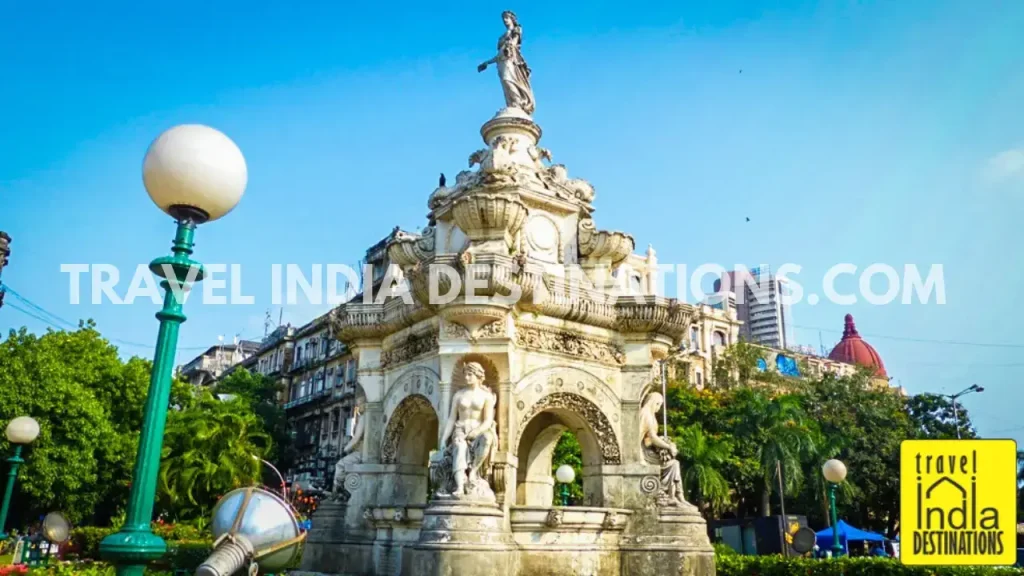
Flora Fountain is more than just a landmark, it is the pulse of South Mumbai. Standing at the intersection, this neo-classical fountain, sculpted in 1864, commemorates Flora, the Roman goddess of flowers.
Its carved stone petals, ornate figures, and intricately detailed bas-reliefs have silently witnessed the city’s transformation, from colonial Bombay to the bustling metropolis it is today.
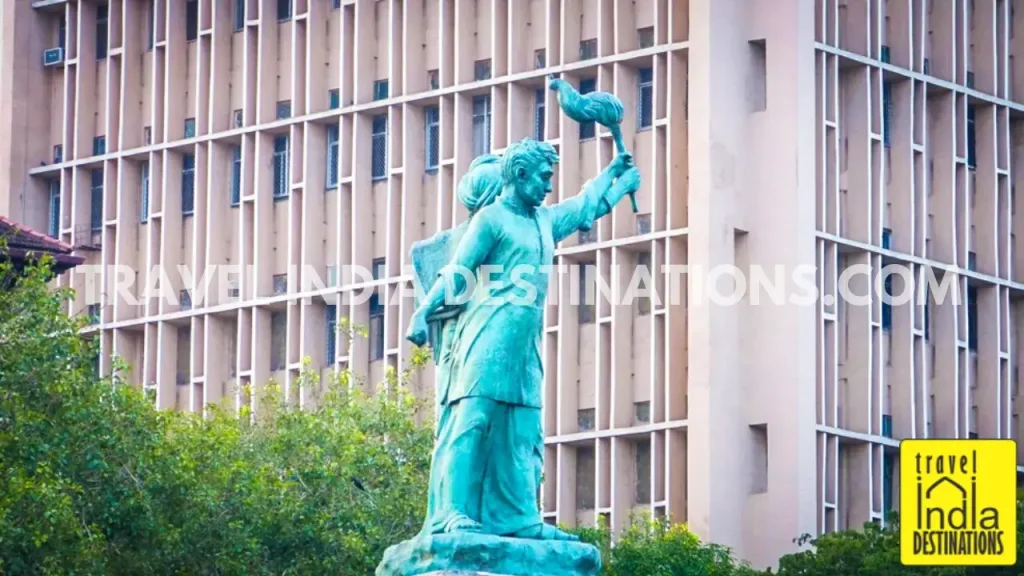
Just a step away lies Hutatma Chowk, a small yet historically resonant square. Once known as Flora Fountain Circle, it was renamed to honour the martyrs of the Samyukta Maharashtra movement.
The juxtaposition of the ornamental fountain with this politically charged space embodies Kala Ghoda’s unique blend of art, architecture, and history. Walking through this area, you feel both the grandeur of the 19th century and the spirit of civic identity that define Mumbai.
However, before you decide to walk ahead you may also take time to admire the mighty Oriental Building.
Oriental Building
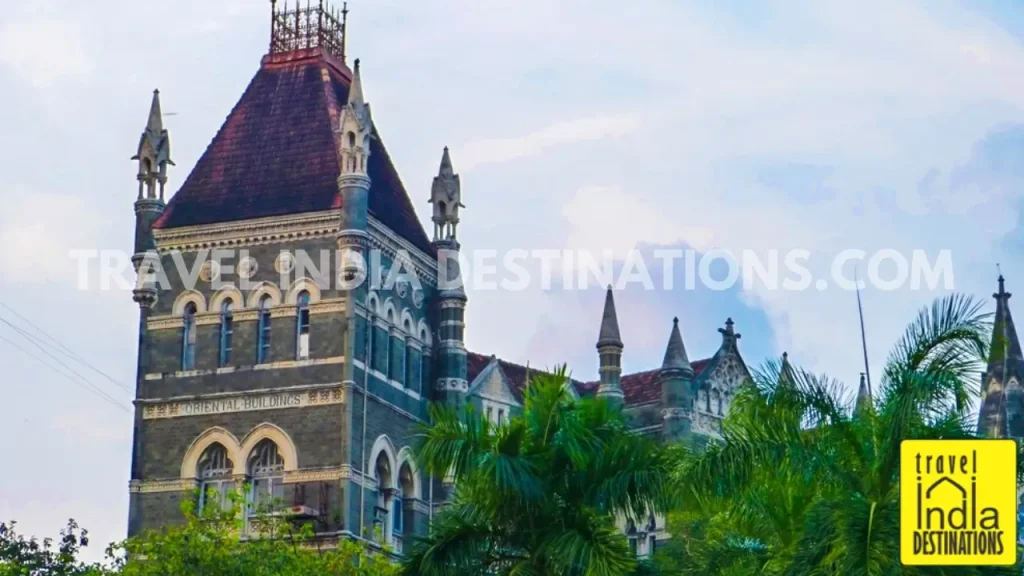
Just a few steps from Flora Fountain and Hutatma Chowk, the Oriental Building rises with quiet authority on M.G. Road. Built in the early 20th century, its neo-Renaissance façade features arched windows, pilasters, and intricate cornices that speak of Bombay’s colonial-era elegance.
The building was once home to offices and trading houses that shaped the city’s mercantile landscape. Today, it stands as a reminder of the ambitions and aesthetics of a bygone era.
Its symmetrical frontage and stone detailing invite the visitor to pause & notice how the light plays across the carved surfaces. If you are a reader, look out for the street book vendors here selling all varieties of books, from John Grisham thrillers to software manuals.
From here, your gaze naturally lifts, catching the outline of the New India Assurance Building, drawing you forward along the M.G. Road.
New India Assurance Building
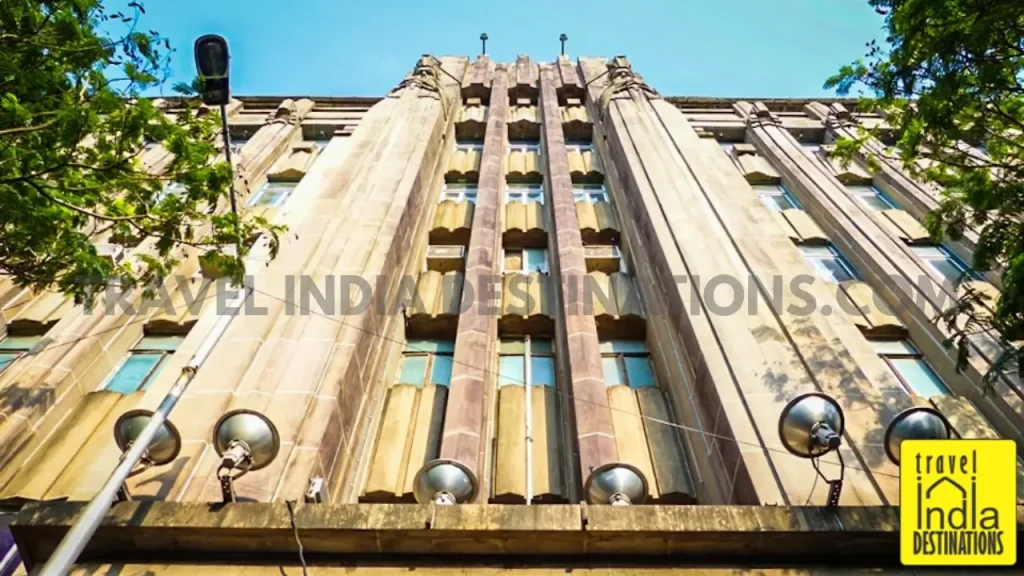
Dominating the MG Road with its imposing façade, the New India Assurance Building is a testament to Bombay’s early 20th-century commercial architecture. Its clean lines, elegant cornices, and expansive windows reflect both practicality and understated grandeur.
This makes this building one of the historical landmarks in Mumbai for businesses and passersby alike. The building’s presence marks a shift from the open public spaces of Flora Fountain to the concentrated rhythm of Kala Ghoda’s institutional heart.
From here, a subtle right turn onto University Road offers a visual surprise: the towering Rajabai Clock Tower rising above the campus of Mumbai University.
This is one of the Gothic revival landmarks that you have to put on your list. It is hard to miss the intricate stonework and vertical silhouette drawing the eye skyward.
While it might not be as tall as the modern skyscrapers in the area today, this tower was once the tallest structure in the city.
Rather than backtracking, you can continue along the road, take the next left at A D’Mello Road toward Esplanade Mansion (Hotel Watson) without interrupting the flow.
Esplanade Mansion
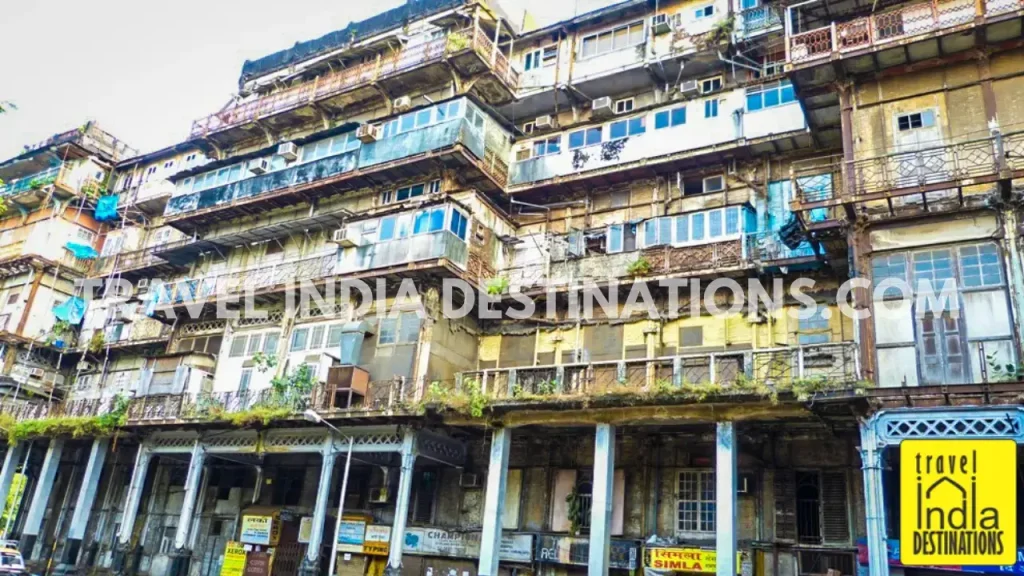
A few minutes’ walk from Rajabai Tower brings you to the Esplanade Mansion, one of Kala Ghoda’s quietly elegant heritage buildings. Originally, known as Hotel Watson, this is India’s oldest surviving cast-iron building.
At first glance, it is hard to realize that this building was once one of the finest hotels in Bombay.
Though modest in scale compared to some of its neighbours, the building exudes character. The building is already in shambles, but you can see subtle details that reward a careful eye. With ornamental brackets, and wrought-iron balconies, this building hints at a time when craftsmanship defined the city’s skyline.
When you are done admiring the Esplanade Mansion, you may want to look across the street for another iconic landmark, the Rhythm House.
Rhythm House & Keneseth Eliyahoo Synagogue
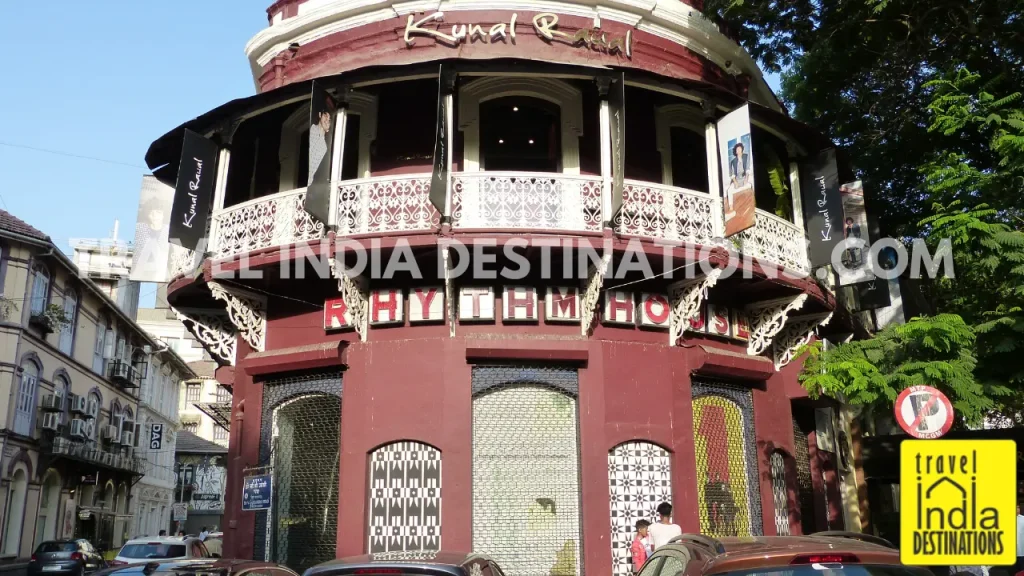
Standing in one of the corners of Kala Ghoda, Rhythm House is one of those places many Mumbaikars pause at instinctively. Once one of the city’s most loved music stores, it played a quiet but influential role in shaping Bombay’s cultural and musical memory.
If you are wondering what led to the shutdown of the city’s most popular music store, read our story on the rise and fall of Rhythm House, Mumbai.
Just behind Rhythm House, almost hidden from plain sight, is the Keneseth Eliyahoo Synagogue. This striking white and blue structure is one of Mumbai’s oldest Jewish places of worship.
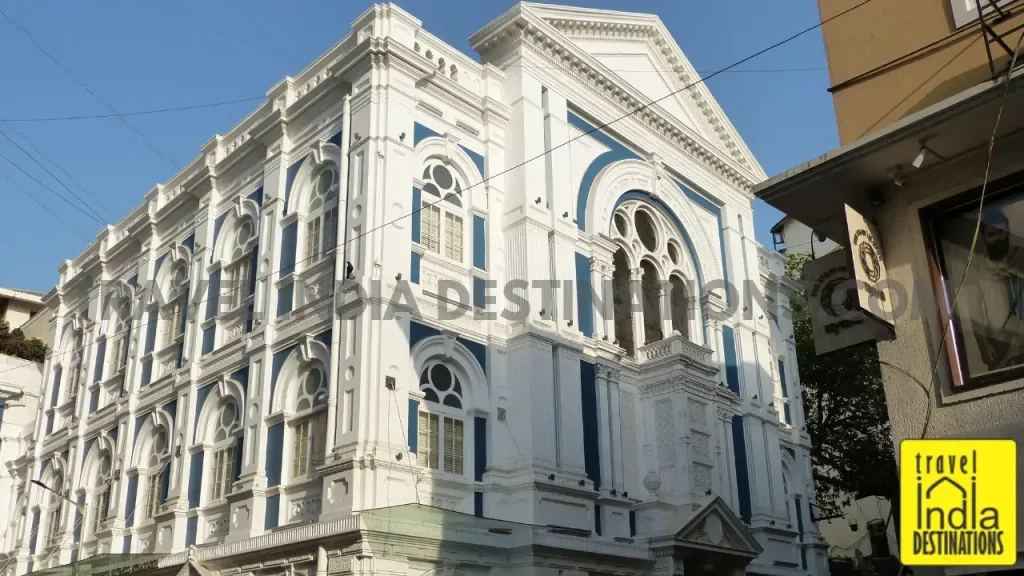
The contrast is subtle but powerful: vibrant public culture in front, layered religious history behind it. Together, they reflect the many lives Kala Ghoda has held within the same few steps.
Across the street from Rhythm House, you see the iconic Army & Navy Building, continuing this tour of Kala Ghoda.
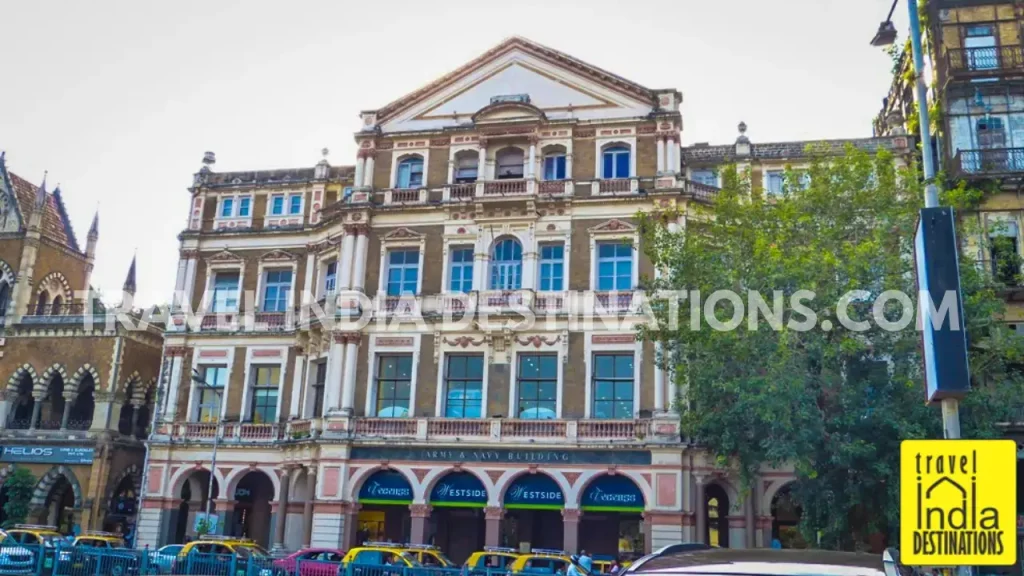
Continuing along the natural arc of the walk, the Army & Navy Building commands attention with its stately presence on the street. Built in the early 20th century, its Neo-Classical façade features grand columns, ornate cornices, and expansive windows. This building once reflected the ambitions of Bombay’s commercial elite.
Originally a hub for businesses and trading houses, today it seamlessly blends historical charm with modern function, quietly anchoring this stretch of Kala Ghoda. If you enjoy shopping, explore the Westside store which also allows you the opportunity to explore the building interiors.
From here, the next logical stop is David Sassoon Library, right next to it.
David Sassoon Library
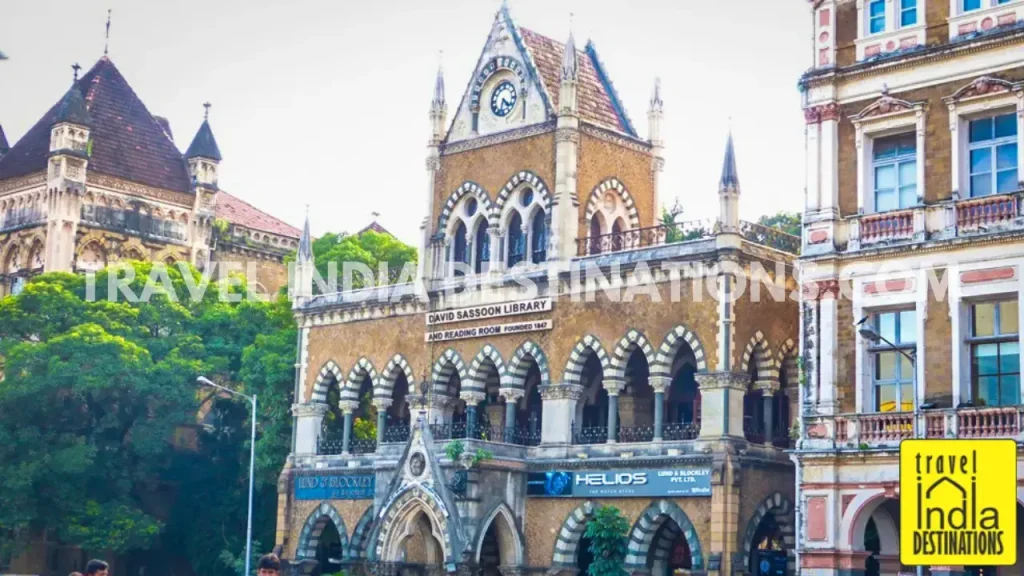
Nestled quietly amidst the bustle of Kala Ghoda, the David Sassoon Library is a sanctuary of history and intellect. Established in 1870, this neo-Gothic gem features pointed arches, detailed stonework, and elegantly tall windows that bathe the reading halls in natural light.
Its façade, a delicate balance of ornamentation and proportion, reflects the philanthropic spirit of the Sassoon family and the Victorian architectural influences of Bombay’s colonial era.
The building’s position along the route creates a natural pause in the walk, allowing visitors to absorb both its grandeur and the rhythm of the surrounding precinct.
From here, the path gently leads to the next landmark: Elphinstone College, a symbol of academic and architectural heritage.
Elphinstone College
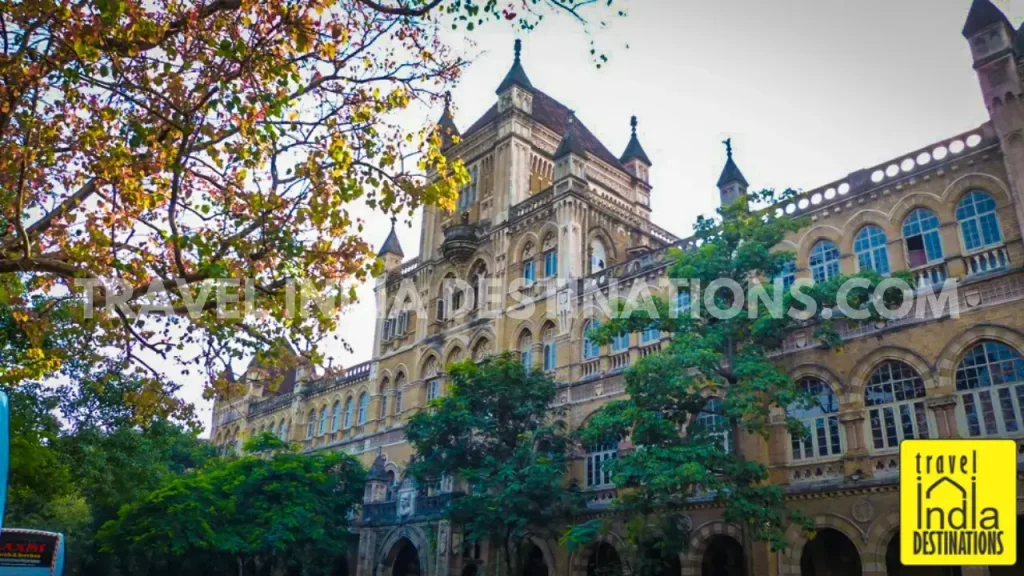
Stepping past David Sassoon Library, the Elphinstone College building rises with a quiet dignity that only decades of history can command. Established in 1856, its Gothic revival architecture features gentle arches, spired towers, and expansive corridors. Thus, creating an academic environment that feels both grand and intimate.
The basalt stone façade, accented with Porbandar limestone trimmings, exudes a scholarly elegance, reflecting the institution’s role in shaping generations of Mumbai’s thinkers, leaders, and artists.
If you are exploring this place on a weekday, you can sense the rhythm of student life mingling with the echoes of history. This building is more than architecture; it’s a living landmark, a bridge between the colonial past and the city’s ongoing educational narrative.
Jehangir Art Gallery
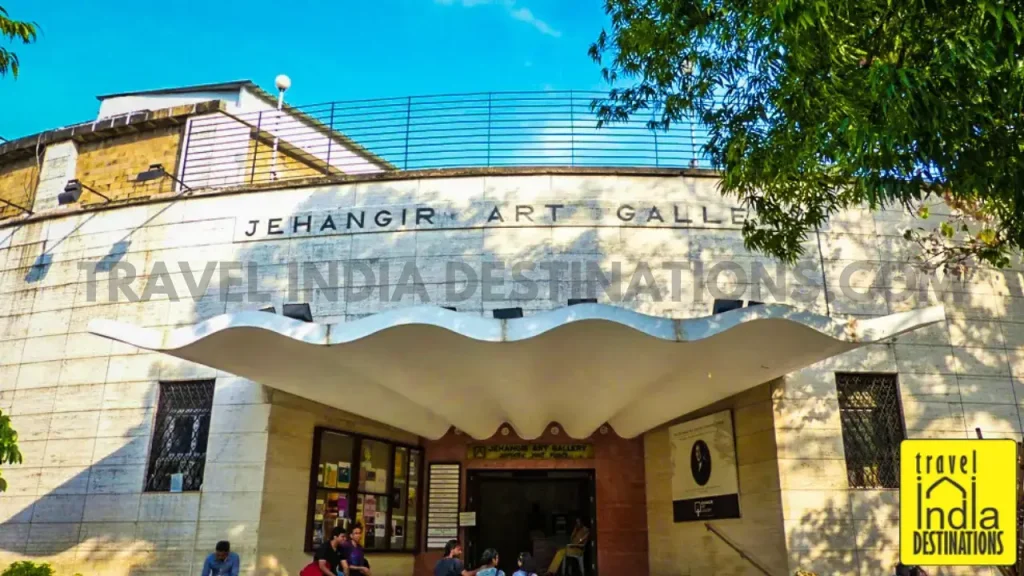
Right across the street from Elphinstone College is Jehangir Art Gallery, the beating heart of Mumbai’s contemporary art scene. Established in 1952, its understated façade conceals a vibrant world inside, where emerging and established artists display paintings, sculptures, and mixed-media works that reflect the city’s ever-evolving creativity.
The gallery’s simple architectural lines, with wide entrances and clean stone detailing, create a quiet stage for the artworks themselves, allowing visitors to focus entirely on the visual narrative.
From here, the walk naturally leads toward Chhatrapati Shivaji Maharaj Vastu Sangrahalaya (CSMVS), one of Mumbai’s most celebrated cultural institutions, keeping the journey immersive and uninterrupted.
Chhatrapati Shivaji Maharaj Vastu Sangrahalaya (CSMVS)
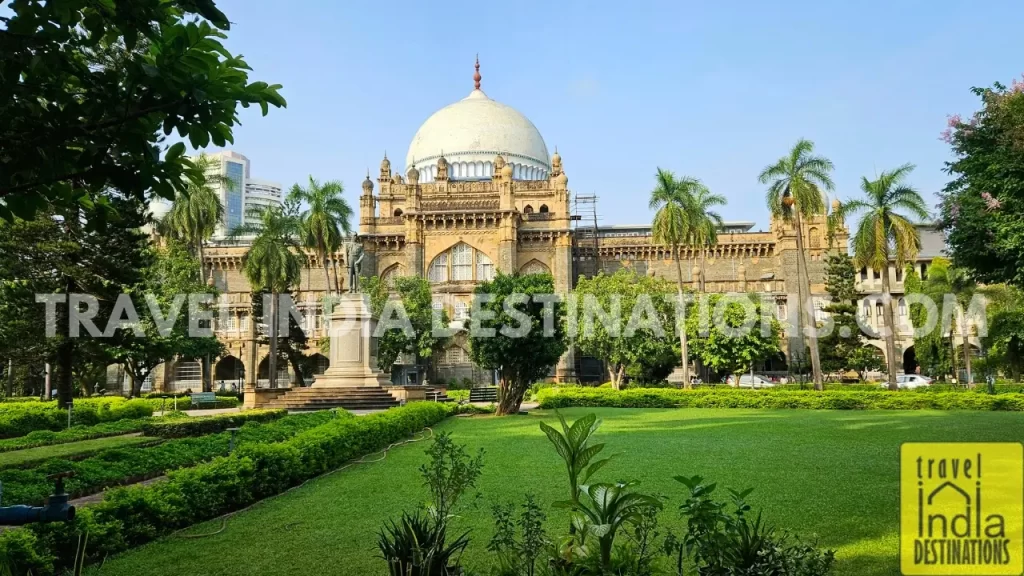
As you continue from Jehangir Art Gallery, admiring the street gallery, the grand façade of CSMVS comes into view. This is a must-visit landmark that defines Kala Ghoda’s cultural heartbeat.
Established in 1922, this Indo-Saracenic masterpiece blends Mughal, Maratha, and Gothic architecture elements seamlessly.
Right from the main gate, you can enjoy the massive dome, arches, and intricate stone carvings that announce its presence long before you reach the entrance. As you walk towards the entrance from the ticket counter, enjoy the art on display in the garden area.
The scale and detail of the building inspire a pause, its blend of elegance and authority captures the city’s colonial history while housing treasures from India and beyond.
Inside and out, CSMVS offers a sensory journey. The lush gardens, stately staircases, and carved stone details invite visitors to linger. Subsequently, the museum’s galleries provide insight into art, history, and natural science.
We spent a quiet afternoon at CSMVS and it was a perfect mid-point stop: culturally rich, visually striking, and a natural anchor that guides you deeper into Kala Ghoda’s layered streetscape.
From here, the route gently leads to the National Gallery of Modern Art, continuing the seamless transition from historical architecture to contemporary culture.
National Gallery of Modern Art (NGMA)
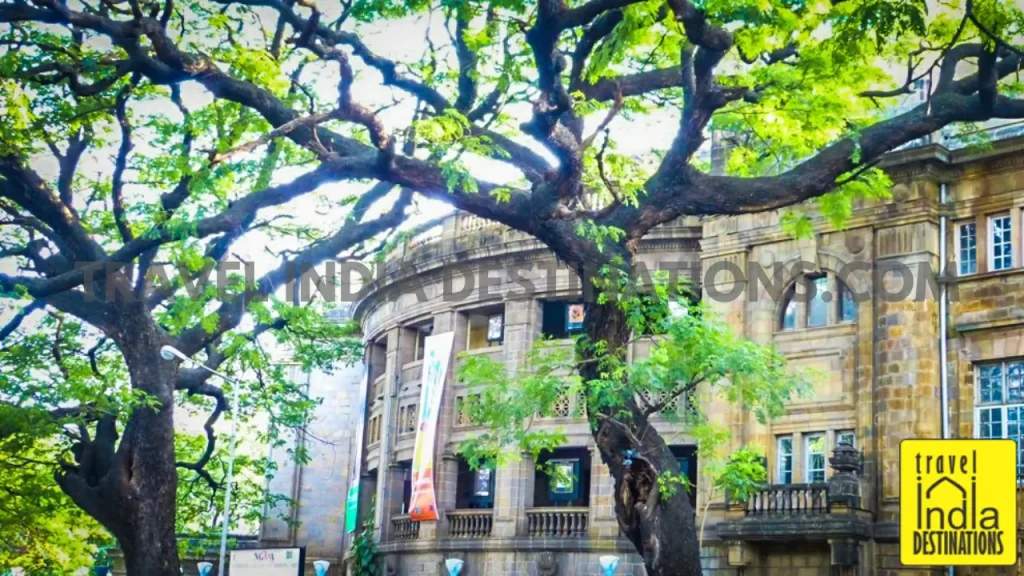
Directly across from CSMVS stands the National Gallery of Modern Art, a modernist counterpoint to the ornate grandeur of its neighbour. Housed in a stately colonial-era building, its clean lines and understated elegance allow the art inside to take center stage.
NGMA showcases India’s 20th- and 21st-century masterpieces, from traditional paintings to contemporary installations. This offers a dynamic perspective on the country’s evolving artistic expression.
Stepping onto its entrance, you feel the contrast immediately: the architecture is restrained, the galleries expansive, and the atmosphere contemplative.
Its proximity to CSMVS creates a unique pairing within a few steps in the same area. Visitors traverse centuries of art, from historical collections to contemporary narratives. The street between the two museums buzzes with pedestrian life and chaotic traffic, yet the walk remains unbroken, and intuitive.
From NGMA, your path naturally heads toward Majestic House allowing you to absorb the city’s architectural rhythm and cultural pulse.
Majestic House
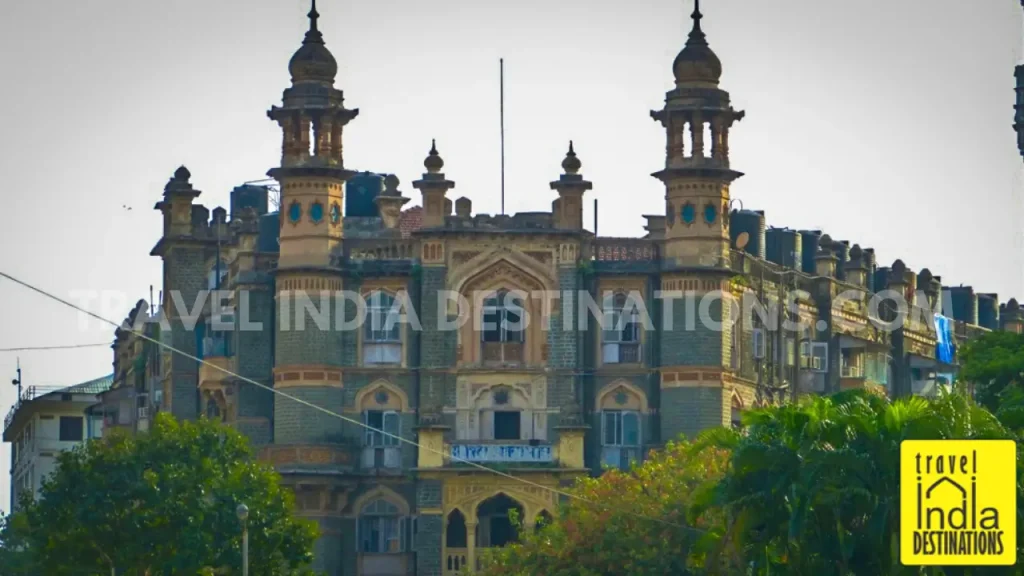
A short stroll from NGMA towards Colaba brings you to Majestic House, a building that subtly commands attention without shouting. Constructed in the early 20th century, its façade combines Art Deco simplicity with colonial-era detailing, reflecting the transitional architectural styles of the period.
Tall windows, geometric patterns, and understated stonework give the building a quiet elegance that rewards careful observation.
Walking past the building, you notice how Majestic House interacts with the street. You can find plenty of street shops and pedestrians, which creates a dynamic interplay between architecture and daily life.
It serves as a gentle bridge between the more monumental museums and the commercial landmarks that follow, such as Regal Cinema. This stop encourages the visitor to slow down, take in proportion and detail, and appreciate the subtleties of Kala Ghoda’s architectural tapestry.
From here, a casual glance across the street reveals the Regal Cinema, barely 30 feet away. However, if you’re willing to take a pause, take some time off at Cafe Mondegar, right across the street. This pub is simply unmissable.
It offers a legendary jukebox, vibrant atmosphere, and walls covered by Mario Miranda’s cartoons depicting Mumbai’s daily life.
Regal Cinema
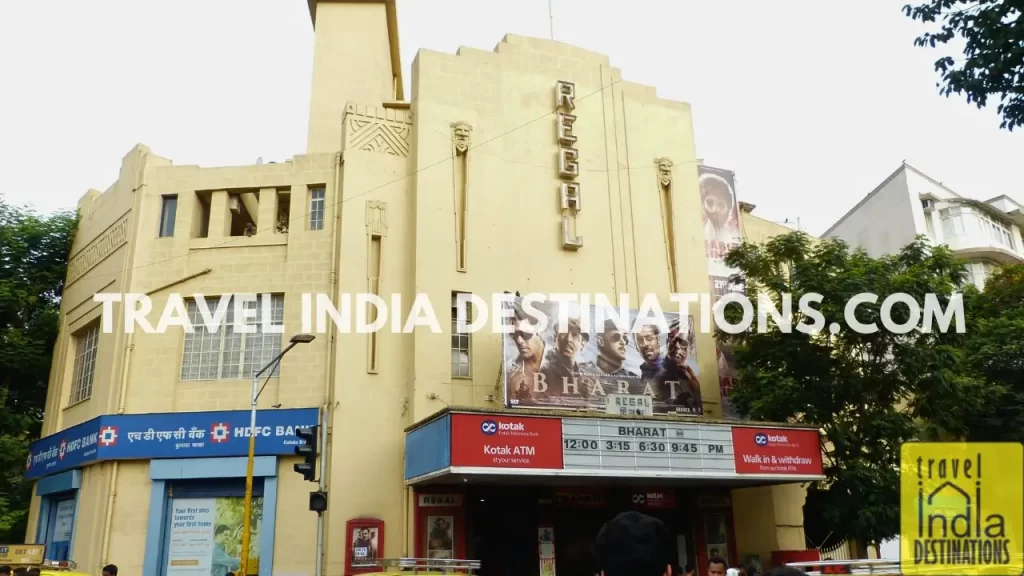
The next stop to this walking tour of Kala Ghoda would be the iconic Regal Cinema. This cinematic landmark transports visitors to Mumbai’s golden era of film.
Opened in 1933, it remains one of the oldest single-screen theatres in Mumbai. Its façade and interior reflect Art Deco influences and the glamour of early cinema.
The theatre’s marquee, subtle detailing, and nostalgic charm make it a cultural touchpoint in Kala Ghoda, bridging heritage architecture with the city’s love for storytelling on screen.
A brief stop here allows visitors to imagine the footsteps of generations of moviegoers and its vibe. This heritage building in Kala Ghoda also reflects the way cinema once defined public life in the precinct.
Maharashtra Police Headquarters
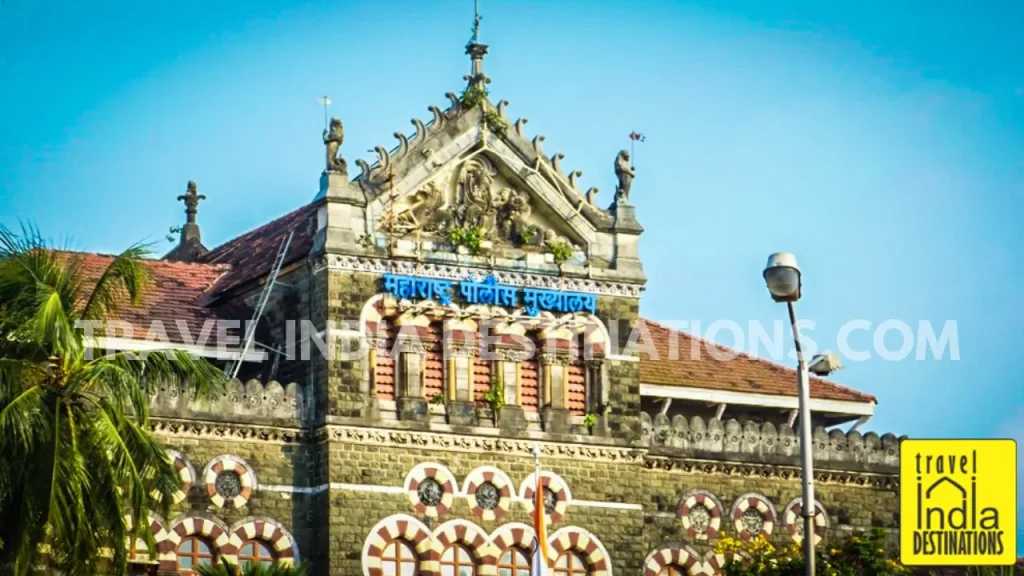
Just across from Regal Cinema, overlooking the Wellington Circle, stands the imposing Maharashtra Police Headquarters. This building blends authority with architectural elegance as you explore its exteriors.
Though the presence of uniformed officers is a constant reminder of its function, visitors can still admire its design from the street.
Its robust columns, detailed cornices, and symmetrical façade make the building a testament to early 20th-century institutional architecture in Bombay.
However, when you look atop, you’ll discover the pediment sculptures depicting Neptune and the nymphs. It seems quite intriguing that a Roman God of fresh seawater sits atop the building façade.
The answer is that formerly, this building was called Royal Alfred’s Sailors’ Home.
A building designed for accommodating sea men and the sculptures symbolize the building’s proximity to the Arabian Sea.
You can pause to appreciate both its scale and artistry, before moving along the walk to the more intimate charm of the Asiatic Library.
Asiatic Library
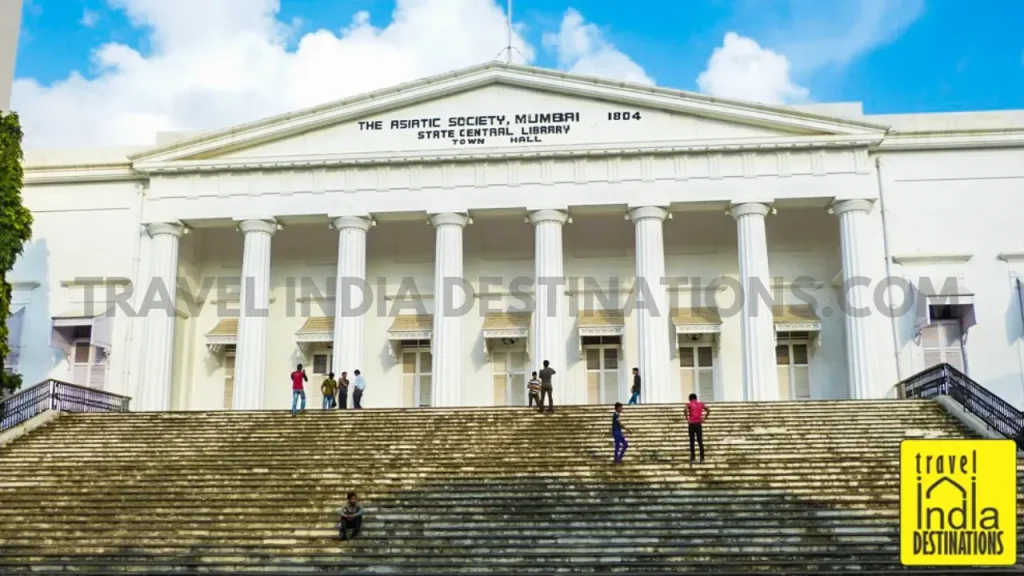
The walk from Maharashtra Police Headquarters to The Asiatic Society of Mumbai is a tad long. However, as you walk along you come across various buildings that offer unique architecture and history. One of such buildings is Church of St. Andrew’s Scot’s Kirk, a Scottish church right in the heart of Mumbai.
A ten-minute walk further brings you to the iconic Asiatic Library. Officially known as The Asiatic Society of Mumbai, this hidden gem tucked in Kala Ghoda is immediately known from its iconic steps.
Established in the early 19th century, its neoclassical façade features tall columns, symmetrical windows, and a pedimented entrance that immediately conveys the gravitas of knowledge within.
The building’s refined elegance contrasts beautifully with the urban energy around it, offering a visual pause for pedestrians walking the route.
From the street, you can appreciate the library as a complete architectural statement. It stands as a reminder that Kala Ghoda’s streets are not just about commerce and art; they are also repositories of learning and civic pride.
From here, we cross the street and head toward the Sir H.C. Dinshaw Building, maintaining the loop while exposing visitors to a different facet of the precinct’s architectural narrative.
Sir H.C. Dinshaw Building
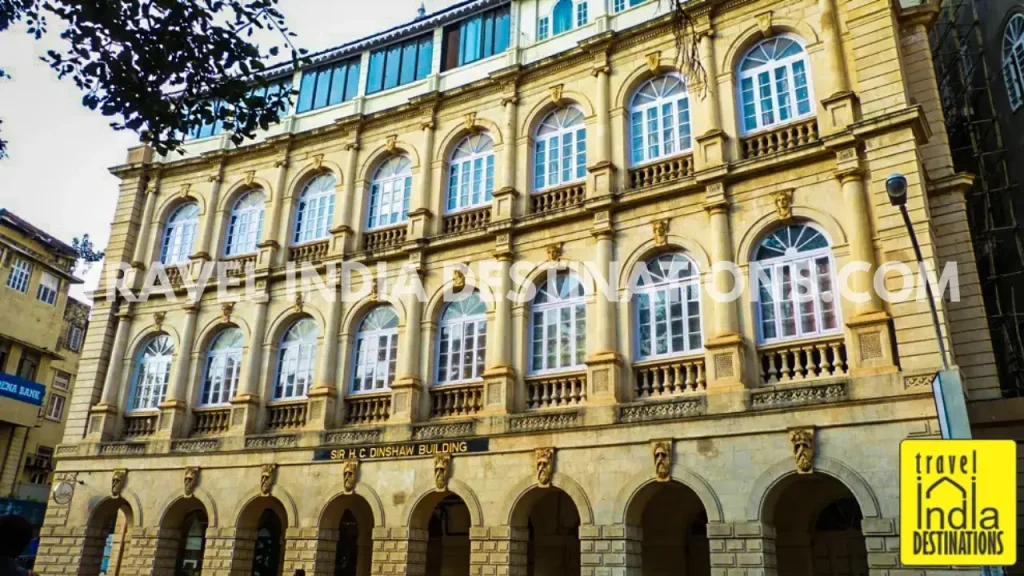
Continuing along Kala Ghoda’s mapped route, the Sir H.C. Dinshaw Building commands attention with its balanced neo-classical curved design. Constructed in the early 20th century, the building features Gothic Italian architecture.
One of the key highlights of this building are the masculine-faced keystones that elevate the arches. What’s interesting is that all keystones have unique facial features including hair and beard.
This certainly complements the eclectic mix of buildings along the precinct, forming a visual bridge between civic, commercial, and cultural landmarks.
It stands as a reminder that every corner here, no matter how understated, plays a role in the district’s architectural narrative.
As we continue the walk, we stand before the Mumbai Samachar Building, maintaining the uninterrupted rhythm of the tour while introducing yet another facet of the precinct’s historic charm.
Mumbai Samachar Building
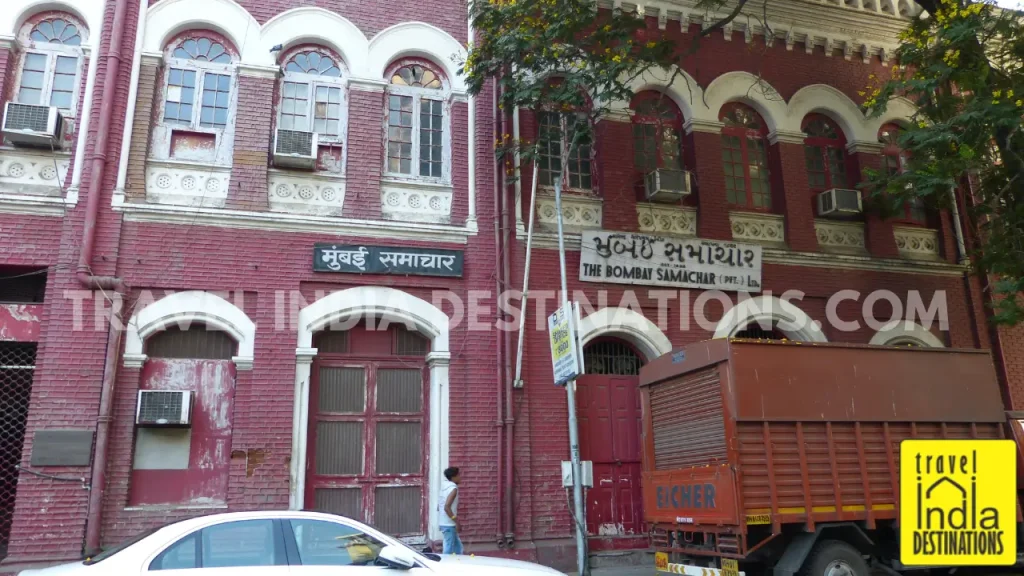
A short walk from the Sir H.C. Dinshaw Building brings us to the Mumbai Samachar Building. This building is home to one of the oldest continuously published newspapers in Asia.
Established in 1822, the building’s red-brick façade is a striking example of colonial-era commercial architecture, restrained yet purposeful.
From the street, you can appreciate how the building sits comfortably among its neighbours, anchoring a corner of Kala Ghoda with both historical and functional significance.
Right next to Mumbai Samachar, you’ll find Mumbai’s first Starbucks outlet, perfect for a quick pause. Alternatively, you can continue straight to St. Thomas Cathedral, just opposite Starbucks, complete the tour, and then take a break.
Its presence reminds visitors that the precinct is not only about grand museums or art galleries, but also about institutions that have quietly chronicled Mumbai’s stories for centuries.
To complete the tour, cross the street and head toward St. Thomas Cathedral, allowing the loop to continue seamlessly.
St. Thomas Cathedral
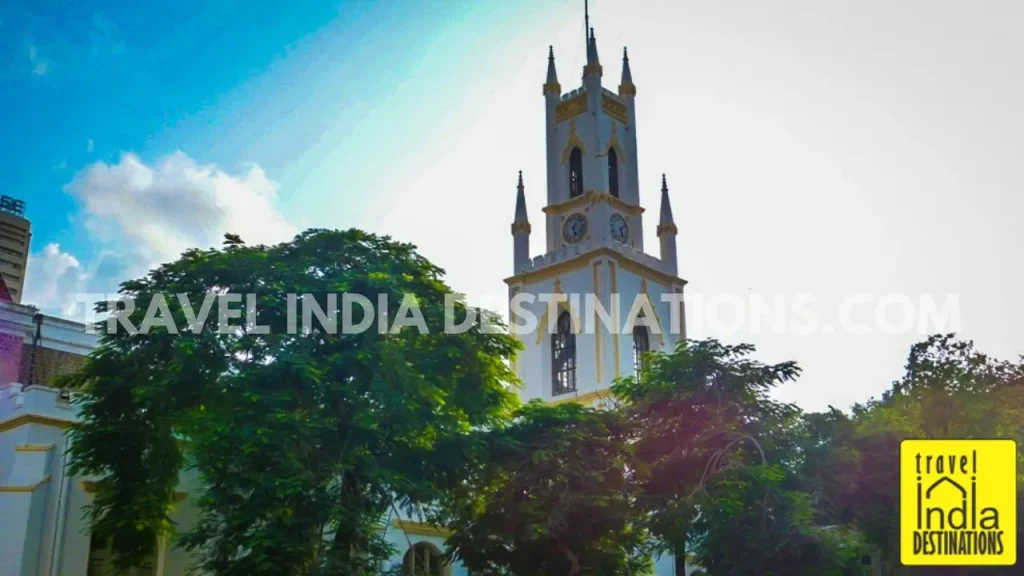
Standing just opposite the Starbucks near Mumbai Samachar, St. Thomas Cathedral is the spiritual anchor of this Kala Ghoda loop. Completed in 1718, it is the first Anglican church in Mumbai and a masterpiece of English Baroque architecture.
Its elegant spire, understated stone façade, and serene courtyard provide a calm contrast to the bustling streets around it. It offers visitors a reflective pause after a walk through Kala Ghoda’s architectural diversity.
From the street, you can admire the building’s proportions and the quiet dignity that has allowed it to endure through centuries of change. If you have time, walk in and take the tour of St. Thomas Cathedral. You may want to sit quietly for a few minutes, soak in the divinity and experience history around. It’s not just a place of worship, it’s a living connection to the city’s colonial past. This heritage building is also a reminder of the layers of history that make Kala Ghoda so unique.
This completes the circular route, brings you back mentally & physically to the precinct’s starting point, the Flora Fountain.
Conclusion
Walking through Kala Ghoda is more than a stroll. It’s a guided exploration of Mumbai’s heritage buildings, historic landmarks, and cultural pulse.
From the grandeur of Flora Fountain to the tranquil St. Thomas Cathedral, this curated walking route offers an unique experience. It lets you soak in the district as a living museum where architecture, history, and city life converge. The best part is that you can cover all these buildings, on foot, in less than three hours.
After completing the loop, pause at nearby pubs and cafés like Cafe Mondegar or the Starbucks to reflect and recharge. However, if you have time, explore Mumbai’s Art Deco buildings, that stand quietly in the shadows of modern skyscrapers.
Whether you’re a first-time visitor or a lifelong Mumbaikar, exploring Kala Ghoda heritage buildings and architecture allows you to step in a new light and explore history at your pace.

4 comments
Thanks for taking us all on this stroll among so many fascinating heritage buildings, Sharukh. I hope this finds you and Sarah well. Happy New Year. Hugs.
You’re welcome, Teagan. Yes, we’re doing fine. Wishing you a Happy New Year and glad that you liked the virtual stroll.
This looks like a delightful tour, Sharukh.
Thank you, Dan.