Lonavala has no shortage of popular monsoon attractions, but two names almost always come up when planning a short trip — Bhushi Dam and Lohagad Fort.
Both are close to each other, both are extremely popular, and both are often included in the same itinerary. Yet, they offer completely different experiences.
Bhushi Dam is a relaxed, easygoing outing centered around water, crowds, and a short stay. Lohagad Fort, on the other hand, is a more active experience that involves a moderate trek, historic surroundings, and rewarding views from the top.
If you’re trying to decide between the two, this comparison will help you choose based on the kind of day you want in Lonavala — whether you prefer something light and casual or something more adventurous and fulfilling.
Bhushi Dam vs Lohagad Fort – Quick Comparison
If you’re short on time, this table should help you decide in under a minute.
| Factor | Bhushi Dam | Lohagad Fort |
| Overall Experience | Relaxed, casual monsoon outing focused on water and leisure | Active trekking experience with history and rewarding views |
| Time Required | 2–3 hours | 4–6 hours (half-day trip) |
| Best For | Relaxed Outing | Active Half-Day Experience |
| Difficulty | Minimal Walking | Moderately Challenging |
| Scenic Beauty & Views | Ground-level greenery & water experience | Expansive panoramic views |
| Crowds & Atmosphere | Crowded and Energetic Vibe | Spread-out Crowd |
| Monsoon Experience | Depends on water flow & rainfall | Green misty views with slippery paths |
| Safety & Practical Considerations | Slippery rocks, Congestion, Parking Challenges | Slippery trek sections, need for proper footwear and pacing |
| Food, Parking & Facilities | More vendors, but congested access and parking | Basic facilities at base, limited on trek route |
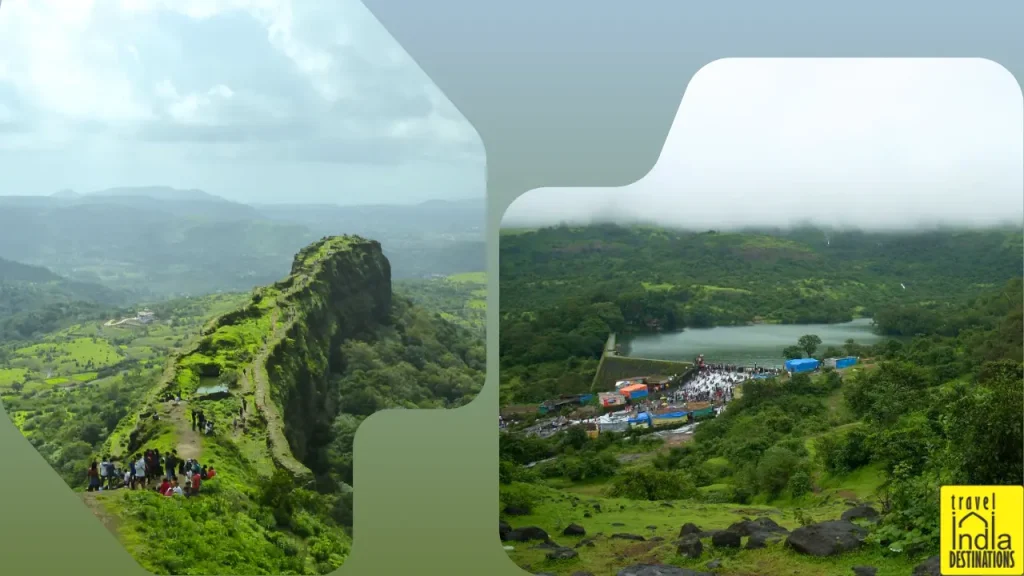
The Biggest Difference Between Bhushi Dam and Lohagad Fort
Although Bhushi Dam and Lohagad Fort are both popular attractions in Lonavala, they cater to very different kinds of travellers.
Bhushi Dam is best suited for those looking for a relaxed monsoon outing with minimal physical effort, while Lohagad Fort appeals to visitors who enjoy trekking, history, and panoramic views.
One is about slowing down and enjoying the moment; the other is about embracing the journey before enjoying the reward.
Choosing between them isn’t about deciding which attraction is better—it’s about deciding what kind of experience you want from your day.
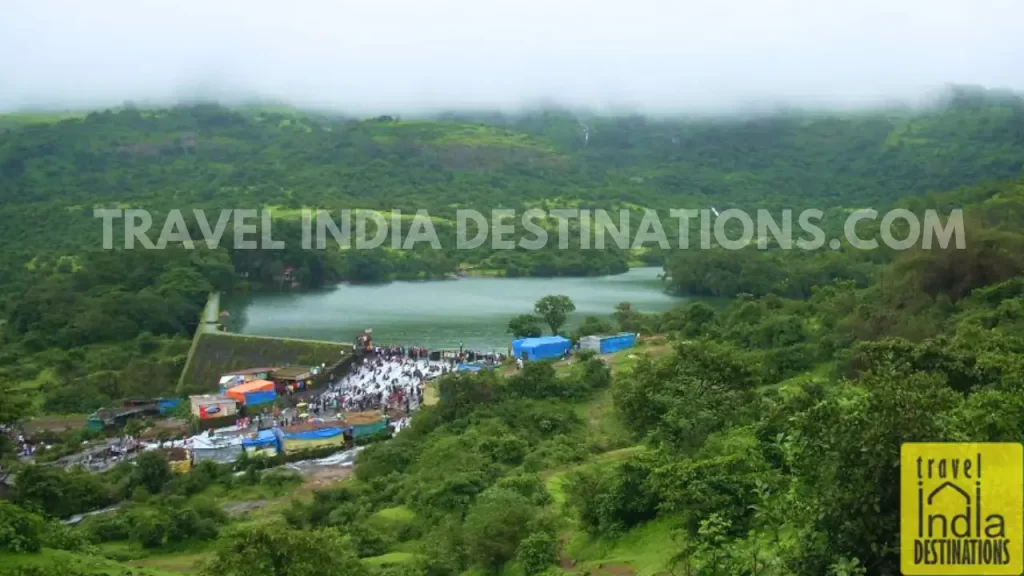
Bhushi Dam vs Lohagad Fort Compared
Bhushi Dam and Lohagad Fort differ not just in what they are, but in how they feel to experience. In this section, we compare them across key factors like time, effort, scenery, crowds, and overall experience to help you decide which one fits your kind of day in Lonavala.
Overall Experience
Bhushi Dam and Lohagad Fort offer completely different overall experiences, shaped more by the kind of day you want than the destination itself.
Bhushi Dam is a relaxed monsoon outing where the focus is on spending time around flowing water, enjoying the atmosphere, and unwinding with friends or family. It is informal, lively, and easy to access, making it more about the moment than the journey.
Lohagad Fort, in contrast, is an active experience built around a gradual trek that becomes more engaging as you climb higher. The effort involved in reaching the top adds meaning to the views and creates a stronger sense of accomplishment once you arrive.
In simple terms, Bhushi Dam is about leisure and spontaneity, while Lohagad Fort is about effort leading to reward.
Time Required
Bhushi Dam requires relatively little time and can easily fit into a short outing. Most visitors spend around two to three hours here, including time spent in the water, walking around, and enjoying food from nearby stalls. It works well as a quick stop within a broader Lonavala itinerary.
Lohagad Fort, on the other hand, takes a larger portion of the day. The trek itself, combined with time spent at the fort and the descent, usually requires around four to six hours depending on pace and breaks. It is not a quick visit, but a half-day experience that naturally shapes the rest of your plan.
Difficulty & Effort
Bhushi Dam is an easy outing with minimal physical effort. Once you reach the area, most of the experience involves walking short distances, stepping into shallow water, and moving around the crowded sections near the dam.
It does not require any fitness level or preparation, which is why it attracts a wide mix of visitors, including families with children and casual day-trippers.
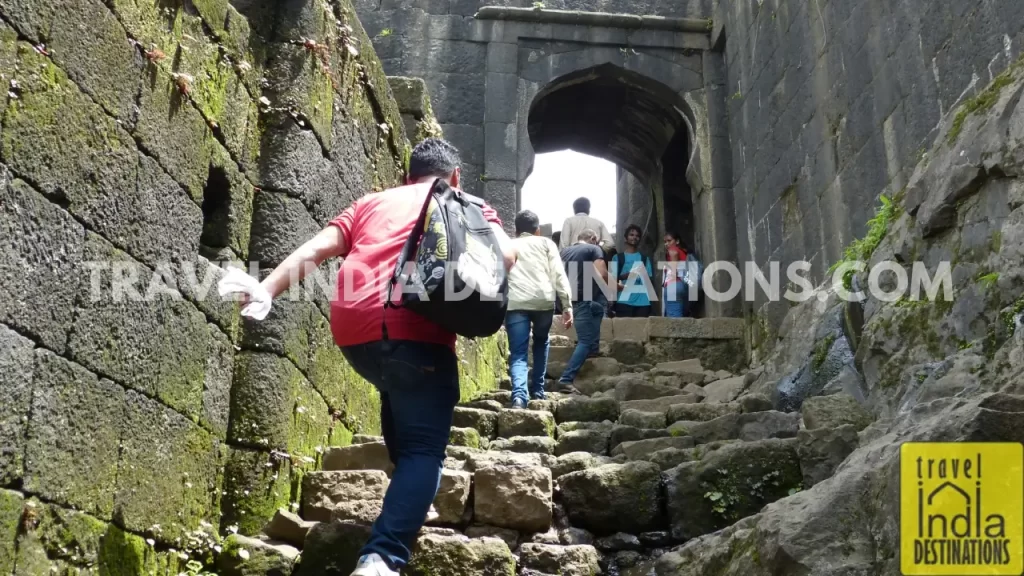
On the other hand, Lohagad Fort requires a moderate level of physical effort due to the trek involved. The climb is steady and becomes more uneven as you approach the upper sections, where stone steps turn into larger, irregular rock formations.
While it is not a technical trek, it does demand stamina, proper footwear, and careful footing, especially during monsoon when the surface can get slippery.
Scenic Beauty & Views
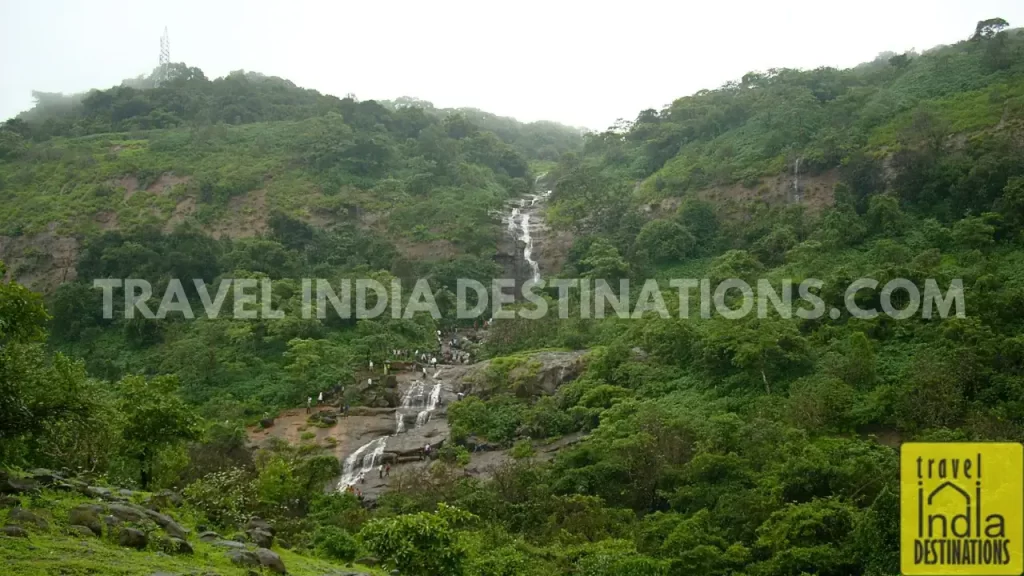
Bhushi Dam offers a scenic monsoon setting where the appeal lies in the surrounding greenery and flowing water rather than expansive viewpoints. The experience is more about being within the landscape—standing in shallow water, surrounded by hills and seasonal flow, than observing it from a height.
In contrast, Lohagad Fort offers increasingly expansive views as you climb. The scenery gradually unfolds with elevation, moving from forested paths and rocky stretches to wide, panoramic views of valleys, hills, and distant landscapes.
The higher you go, the more open and dramatic the surroundings become, especially during monsoon when clouds and mist move across the fort.

Crowds & Atmosphere
Bhushi Dam is typically very crowded during the monsoon season, especially on weekends and public holidays. The atmosphere is energetic but chaotic, with large groups of visitors gathered around the water.
One can also find vendors along the approach roads, and constant movement in and out of the area. It feels lively, but also fast-paced and tightly packed in certain sections.
Lohagad Fort also attracts crowds, but the experience is more spread out along the trekking route. Instead of a single concentrated area, people are distributed along the climb, resting at different points, moving at their own pace, and occasionally stopping to take in the views.
This creates a more balanced and steady atmosphere, where the journey itself feels shared but not crowded in one place.
Monsoon Experience
When it comes to monsoon experience, how you experience Bhushi Dam is highly dependent on rainfall in the preceding days. Heavy monsoon weather and strong water flow brings in more visitors.
However, it also increases the risk of the area being overcrowded and accidental fatalities. During peak monsoon weekends, this can impact the comfort and convenience of your trip.
On the other hand, the surrounding hill around Lohagad Fort turns green and the entire trek is wrapped in mist and clouds. However, the trail can become slippery due to rain, especially on the uneven stone sections near the top.
While the scenery improves dramatically in this season, it also demands more caution and appropriate footwear to handle wet and muddy paths safely. It is, therefore, essential to have knowledge of how to ascend without getting hurt in bad weather.
Safety & Practical Considerations
Bhushi Dam requires extra caution during the monsoon due to slippery rocks and uneven surfaces near the water. Visitors often move freely in wet areas, so awareness of footing is important, especially in crowded conditions.
Parking and access roads can also get congested during peak hours, which may add waiting time before reaching the main area. It is best suited for relaxed activity rather than adventurous movement.
Lohagad Fort, while generally safe as a trekking route, requires careful attention during the climb, especially in monsoon when stone steps and boulder sections become slippery.
The descent can be more demanding than the ascent due to gravity and loose footing on uneven surfaces. Basic trekking shoes, steady pacing, and avoiding rushing in crowded sections significantly improve safety.
Facilities like food stalls and basic washrooms are available near the base of the fort, but not along the upper trek. Hence, you need to plan everything thoroughly before you climb the fort.
Food, Parking & Facilities
Bhushi Dam has a wide range of local food stalls and vendors near the main entry and surrounding areas, offering snacks and quick bites that suit a casual outing.
However, parking can be challenging during peak monsoon weekends due to heavy crowds, and access roads often experience congestion.
Basic facilities are available nearby, but the overall setup is more informal and shaped by seasonal tourism activity.
Lohagad Fort has food stalls and small eateries at the base of the trek, where visitors usually rest before or after the climb. Parking is available near the starting point, but can fill up quickly during busy periods.
Once the trek begins, there are no commercial facilities along the route, so visitors need to rely on what they carry with them. The experience remains relatively simple and focused on the trek itself rather than developed tourist infrastructure.
Which Should You Choose?
Bhushi Dam and Lohagad Fort are not competing on quality, but on the kind of experience you want from your day in Lonavala. The right choice depends entirely on your travel style, energy level, and how you prefer to spend your time outdoors.
Choose Bhushi Dam if…
- You want a relaxed monsoon outing with minimal walking
- You are travelling with family, children, or senior citizens
- You prefer spending time in water and enjoying a casual atmosphere
- You are looking for a short, flexible stop within your Lonavala plan
- You are okay with crowds in exchange for an easy, fun experience
Choose Lohagad Fort if…
- You enjoy trekking and a bit of physical challenge
- You want panoramic views and a more immersive nature experience
- You prefer an activity that feels rewarding after effort
- You are comfortable walking on uneven, sometimes slippery terrain
- You want your day to feel like an experience rather than a quick outing
There is no wrong choice here—only a better match for the kind of day you want in Lonavala. Bhushi Dam is about ease and spontaneity, while Lohagad Fort is about effort leading to reward.
Can You Visit Both in One Day?
Yes, it is possible to visit both Bhushi Dam and Lohagad Fort in a single day since they are located within a reasonable distance in Lonavala. However, it depends on your pace and how much time you want to spend at each location.
Bhushi Dam usually takes a shorter time, making it easier to fit into a half-day plan, while Lohagad Fort requires a larger time commitment due to the trek and return journey. If you plan carefully and start early, both can be covered, but it may feel rushed, especially during weekends or peak monsoon when crowds and traffic can add delays.
For a more relaxed experience, it is generally better to choose one based on your interest rather than trying to squeeze both into the same day.
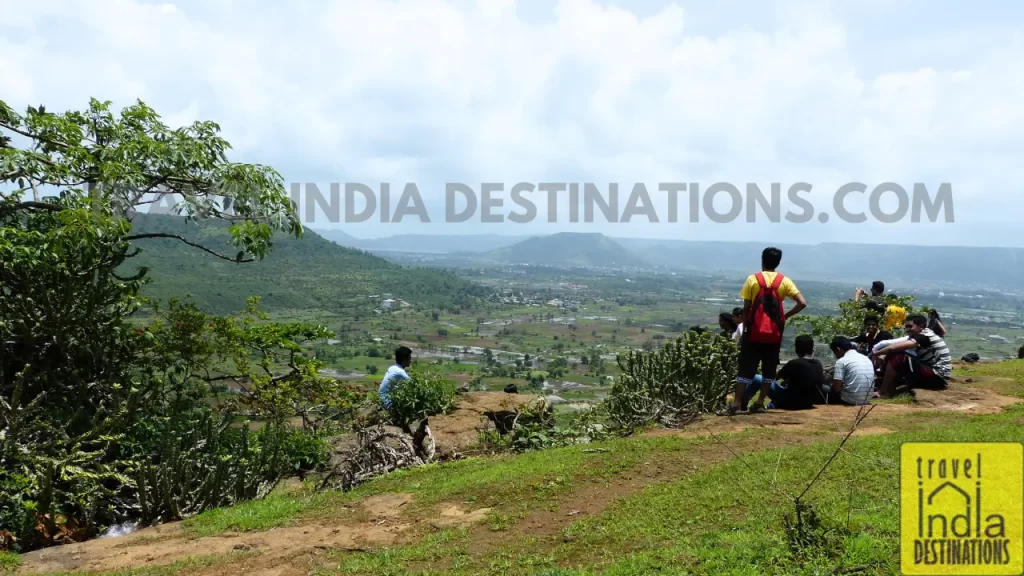
Bhushi Dam and Lohagad Fort are just two of the many experiences Lonavala offers, and the best trip often comes from combining the right mix of attractions, stay, and timing.
Whether you choose a relaxed outing or a more active day, planning ahead helps you make the most of the monsoon season without rushing between places.
If you’re building a complete itinerary, you may also want to explore our detailed guides on Bhushi Dam and Lohagad Fort for route information, timings, and tips, along with curated recommendations for the best places to visit in Lonavala and where to stay for a comfortable trip.
👉 Read These Guides Before You Go:
- Bhushi Dam Guide: What to Know Before You Go
- A Hiker’s Guide to Bhaja Caves Near Lonavala
- Hiking from Bhaja Caves to Lohagad Fort
- A Complete Lohagad Fort Trek Guide
- Practical Tips for Hiking Forts in India
- Best Places to Visit in Lonavala
- Best Hotels in Lonavala You’ll Actually Want to Book
FAQs: Bhushi Dam vs Lohagad Fort
Neither is universally better. Bhushi Dam is better for a relaxed outing, while Lohagad Fort is better for trekking and views. The right choice depends on the kind of experience you prefer.
Bhushi Dam is much easier and requires minimal walking. Lohagad Fort involves a moderate trek with uneven stone steps and requires more stamina.
Bhushi Dam usually takes around 2–3 hours, while Lohagad Fort takes around 4–6 hours depending on your pace and breaks.
Yes, beginners can do the trek, but they should be prepared for uneven terrain and slippery sections during monsoon. Proper footwear and a steady pace are important.
Both are popular in monsoon, but in different ways. Bhushi Dam depends on water flow and can get very crowded, while Lohagad Fort offers better greenery and views but requires more caution due to slippery paths.
Yes, both can be covered in one day due to their proximity, but it may feel rushed. It is better to choose one if you want a relaxed experience.
Get more destination comparisons like this straight in your inbox to help you choose your next trip with confidence.
Final Thought
Bhushi Dam and Lohagad Fort may be close to each other on the map, but they offer two very different ways of experiencing Lonavala. One is light, spontaneous, and easygoing, while the other is more immersive, active, and rewarding in its effort.
If your idea of a good day is simply relaxing around water, spending time with people, and keeping things casual, Bhushi Dam fits naturally into that plan.
In contrast, if you prefer a day that involves movement, a bit of challenge, and views that feel earned after a climb, Lohagad Fort delivers a more memorable journey.
In the end, it is less about which place is better and more about what kind of experience you want from Lonavala.
